Sports Medicine — Complete Guide
All 13 chapters in one place. Use the chapter buttons above or the left 'On this page' list to switch chapters.
The Body as a Machine
机器即身体,身体即机器
| Pattern | Core idea |
|---|---|
| Pattern 1 — Stress → Recovery → Adaptation | Training is the stress; rest is when you actually get stronger. 训练是压力,恢复时才真正变强。 |
| Pattern 2 — Structure = Function | Collagen's wavy design lets tendons spring; flat cells line blood vessels. 结构决定功能。 |
| Pattern 3 — Energy systems are specialized | Three energy pathways cover every activity from a sneeze to a marathon. 三大供能系统各司其职。 |
| Pattern 4 — SAID principle | Specific Adaptation to Imposed Demands — the body remodels exactly along the lines you train. 用进废退,按需适应。 |
| Pattern 5 — Dose-response / Individuality | Genetics set a range; training, nutrition, sleep, and age determine where in that range you land. 基因定范围,训练定位置。 |
- What these are: Five context-free ideas explain nearly every training plan, injury, and rehab program; know them cold. (五个不依赖情境的观念可解释几乎所有训练方案、损伤与康复程序;务必烂熟于心。)
- Stress → recovery → adaptation: The load breaks homeostasis (ATP/glycogen depletion, metabolite build-up, sarcomere damage); given rest, the body supercompensates ABOVE baseline — which is why strength builds during rest, not the workout. (负荷打破内稳态(ATP/糖原耗竭、代谢物堆积、肌节受损);给予休息后,机体超量补偿并超过基线——这正是力量在休息期而非训练期增长的原因。)
- Structure = function: Wavy (crimped) tendon collagen stores & releases elastic energy; flat endothelial cells line vessels to minimize drag. (波浪状(卷曲)肌腱胶原储存并释放弹性势能;扁平内皮细胞衬于血管内以减小阻力。)
- SAID principle: The body remodels exactly along the lines you train — endurance→mitochondria, strength→fiber cross-section, neural stress→better recruitment. (机体严格沿你所训练的方向重塑——耐力→线粒体,力量→纤维横截面,神经应激→更好的募集。)
- Dose–response & individuality: Response is bounded by genetics/age/history/nutrition/sleep; set the dose within the adaptive range (too little = no change, too much = injury). (应答受遗传/年龄/经历/营养/睡眠所界定;将剂量设定在适应范围内(过少=无变化,过多=损伤)。)
🎯TEST PREPBoard-exam essentials
- NPTECN Selye's General Adaptation Syndrome (GAS): alarm (stress) → resistance (supercompensation) → exhaustion (overtraining). (汉斯·塞利的一般适应综合征(GAS):警觉期(应激)→抵抗期(超量补偿)→衰竭期(过度训练)。)
- NPTECN Supercompensation needs recovery ABOVE baseline; back-to-back stress without rest drives exhaustion. (超量补偿须在恢复期超过基线;连续应激不休息则趋向衰竭。)
- NPTECN Form follows function: pick the structural feature that MATCHES a mechanical role (e.g., crimped tendon collagen = energy storage). (结构决定功能:选出与机械作用相匹配的结构特征(如肌腱胶原卷曲=储能)。)
- NPTECN SAID explains why generic 'cross-training' is limited: you adapt only to the actual demand. (SAID解释了笼统“交叉训练”的局限:只适应实际需求。)
- The machine & its supply lines: A musculoskeletal machine (~640 muscles, ~206 bones) served by the cardiovascular–respiratory system (O₂ + fuel) and the nervous system (commands), kept at ~37 °C by thermoregulation. (一台骨骼肌肉机器(约640块肌、约206块骨)由心血管—呼吸系统(O₂+燃料)与神经系统(指令)服务,并由体温调节维持在约37°C。)
- Why temperature matters: Resting heat must balance heat loss (radiation, convection, conduction, evaporation); during intense exercise muscle heat can exceed rest by >10×, and sweating (evaporation) takes over as the dominant cooling mechanism — linking to fluid/electrolyte balance. (静息产热必须与散热(辐射、对流、传导、蒸发)平衡;剧烈运动时肌肉产热可超过静息10倍以上,出汗(蒸发)成为主导散热机制——这与体液/电解质平衡相关联。)
- Normal values: Core temp is ~36.1–37.5 °C (cited as 37 °C / 98.6 °F), with a circadian low in the early morning. (核心体温约36.1–37.5°C(常写作37°C/98.6°F),清晨存在昼夜节律性低谷。)
- Fever vs hyperthermia: Fever = hypothalamic set-point raised (infection); hyperthermia = heat-dissipation failure (e.g., exertional heat stroke) — a medical emergency. (发热=下丘脑设定点上调(感染);高温/过热=散热机制失效(如劳力性热射病)——属内科急症。)
🎯TEST PREPBoard-exam essentials
- NPTECN ~640 skeletal muscles; ~206 bones; 3 energy systems; ~37 °C core. (约640块骨骼肌;约206块骨;三大供能系统;约37°C核心体温。)
- NPTECN Normal core temp is NOT fixed at exactly 37 °C — it ranges ~36.1–37.5 °C, lowest early morning (circadian). (正常核心体温并非恒定37°C——约在36.1–37.5°C间波动,清晨最低(昼夜节律)。)
- NPTECN Fever = set-point reset; hyperthermia = dissipation failure (emergency). (发热=设定点重置;高温=散热失效(急症)。)
- NPTECN Exercise heat production can exceed rest >10×; evaporation dominates cooling. (运动产热可超静息10倍以上;蒸发主导散热。)

| System | Fuel | Speed | Duration | Example |
|---|---|---|---|---|
| Phosphagen | ATP + CP | Instant | ≤ 10 s | 100 m sprint |
| Glycolytic | Glycogen → pyruvate | Fast | ~10 s – 2 min | 400 m run |
| Oxidative | Carbs + fats + O₂ | Slower but vast | > 2 min | Marathon |
- Why three systems: Muscle stores only ~2–3 s of ATP; continuing work needs continuous ATP regeneration, achieved by three routes. (肌肉仅储存约2–3秒的ATP;持续工作需不断再生ATP,通过三条途径实现。)
- Phosphagen (ATP–CP): Creatine kinase: PCr + ADP → ATP + Cr — near-instant, no O₂, fastest rate but tiny capacity (a few seconds); sole system for maximal explosive efforts. (肌酸激酶:PCr+ADP→ATP+Cr——近乎即时,无需O₂,速率最快但容量极小(数秒);是最大爆发动作唯一重要的系统。)
- Glycolytic (fast anaerobic): Glycogen → pyruvate → lactate, ~2–3 ATP per glucose, no O₂; dominates ~10 s–2 min; the resulting acidosis (lactate/H⁺) drives fatigue in mid-distance efforts like the 400 m. (糖原→丙酮酸→乳酸,每葡萄糖约2–3 ATP,无需O₂;在约10秒–2分钟占主导;所产生的酸中毒(乳酸/H⁺)触发中距离项目(如400米)的疲劳。)
- Oxidative (aerobic): Carbs, fats (and some amino acids) fully oxidized in the Krebs cycle + oxidative phosphorylation; ~30–32 ATP/glucose, ~100+/palmitate; slower rate but unlimited capacity; dominates beyond ~2 min. (碳水、脂肪(及部分氨基酸)在三羧酸循环+氧化磷酸化中完全氧化;每葡萄糖约30–32 ATP,每棕榈酸约100+;速率较慢但容量无限;约2分钟以上占主导。)
- Three exam-relevant facts: (1) All systems run simultaneously — only relative contribution changes. (2) Intensity favors fast systems; duration favors oxidative. (3) Lactate is a substrate, not just waste — recycled via the Cori cycle (liver) or re-oxidized in oxidative fibers. ((1) 三条系统同时运行——改变的只是相对贡献。(2) 强度偏好快速系统;持续时间偏好氧化系统。(3) 乳酸是底物而非单纯废物——经Cori循环(肝脏)回收,或在氧化型纤维中再氧化。)
🎯TEST PREPBoard-exam essentials
- NPTECN ATP ~2–3 s; CP ~10 s; glycolysis ~10 s–2 min; oxidative unlimited. (ATP约2–3秒;CP约10秒;糖酵解约10秒–2分钟;氧化无限。)
- NPTECN Creatine kinase: PCr + ADP → Cr + ATP (fastest, no O₂). (肌酸激酶:PCr+ADP→Cr+ATP(最快,无需O₂)。)
- NPTECN Glycolysis ≈2–3 ATP/glucose vs full oxidation ≈30–32 — the ~10× gap is why oxidative is 'vast'. (糖酵解约2–3 ATP/葡萄糖 vs 完全氧化约30–32——约10倍差距是氧化“容量巨大”的原因。)
- NPTECN Cori cycle: lactate → liver → glucose (recycling of glycolytic end-products). (Cori循环:乳酸→肝脏→葡萄糖(糖酵解终产物的循环)。)
- NPTECN Relative contribution shifts with effort; brain & heart rely on oxidative (aerobic) metabolism. (相对贡献随运动强度而变;脑与心脏依赖氧化(有氧)代谢。)
- NPTECN CN angle: 即时(<10s)/短时(10s–2min)/长时(>2min) map to 磷酸原/糖酵解/氧化。 (CN角度:即时(<10s)/短时(10s–2min)/长时(>2min)对应磷酸原/糖酵解/氧化。)

- A mosaic of fibers: Muscle is a mix of fibre types differing in contraction speed, myosin ATPase activity, metabolism, and fatiguability.
- Type I — slow-twitch, oxidative: Slow myosin ATPase; many mitochondria and myoglobin; dense capillaries; ATP mainly from oxidative phosphorylation. Slow to contract but very fatigue-resistant — the endurance and postural workhorses (e.g., soleus, erector spinae).
- Type II — fast-twitch: Fast contraction and high peak power; rely on phosphagen plus glycolysis; fewer mitochondria and capillaries; fatigue quickly.
- Subtypes IIa vs IIx/IIb: IIa = fast oxidative-glycolytic (moderate fatiguability); IIx/IIb = fast glycolytic — fastest and most powerful, but fatigue fastest of all.
- Recruitment & training: Henneman size principle: Type I motor units recruited first, then faster/stronger Type II as force demand rises. Fibre composition is partly genetic, partly trainable — endurance shifts fibres oxidative; resistance promotes hypertrophy of fast fibres.
🎯TEST PREPBoard-exam essentials
- NPTECN Type I = red / oxidative / fatigue-resistant; Type II = white / fast / powerful / fatigue quickly.
- NPTECN Subtypes: IIa (fast oxidative-glycolytic) vs IIx/IIb (fast glycolytic — fastest and strongest).
- NPTECN Henneman size principle: Type I BEFORE Type II as force demand rises.
- NPTECN Type I = oxidative phosphorylation; Type II = phosphagen + glycolysis.
- NPTECN Anti-gravity / posture muscles are predominantly Type I; power muscles have more Type II.
- NPTECN CN angle: red (slow) fibre is fatigue-resistant, white (fast) fibre is powerful but fatigues fast.
- The principle: 'Use it or lose it' made scientific: the body remodels precisely toward the demands it meets, and toward no others.
- Endurance adaptation: More mitochondria, myoglobin, capillaries, and oxidative enzymes; better fat utilization (glycogen sparing); raises aerobic capacity and delays fatigue. Largely reversed within weeks of detraining.
- Resistance adaptation: Myofibrillar hypertrophy and larger fibre cross-section, plus stronger neural drive (motor-unit recruitment and rate coding).
- Early gains are neural: Maximal-strength gains in the first weeks come mainly from better nervous drive BEFORE structural hypertrophy — explains the rapid gains seen in novices and after detraining.
- Dosing & rehab: Overload must exceed capacity, progress systematically, and be specific (overload / progression / specificity). Sub-threshold = no change; supra-threshold = injury. Rehabilitation uses SAID in reverse to retrain the exact demands of a sport for safe return to play.
🎯TEST PREPBoard-exam essentials
- NPTECN SAID = adaptation equals demand; train the capacity you want.
- NPTECN Endurance → mitochondria / myoglobin / capillaries / oxidative enzymes; Resistance → myofibrillar hypertrophy + neural drive.
- NPTECN Early strength gains are NEURAL (recruitment / rate coding) before hypertrophy.
- NPTECN Three pillars: overload, progression, specificity. Sub-threshold = none; supra-threshold = injury.
- NPTECN Detraining reverses adaptation within weeks — 'use it or lose it' literally.

| Myth | Reality |
|---|---|
| "Energy drinks go straight into muscles" | Cells need ATP via transporters — you can't drink ATP. |
| "Loading phase is mandatory for creatine" | Optional: 3–5 g/day reaches saturation in ~3–4 weeks. |
- Myth 1 — 'energy drinks go straight into muscles': Even if an ingredient survives digestion & absorption, muscle does not import ready-made ATP; it takes up SUBSTRATE (glucose, fatty acids) through membrane transporters and makes ATP inside the cell. (即便成分能耐受消化吸收,肌肉也不摄取现成ATP;它通过膜转运体摄取底物(葡萄糖、脂肪酸),并在细胞内合成ATP。)
- Myth 2 — 'creatine loading is mandatory': Creatine is made in liver/kidney and obtained from meat/fish; supplementing just raises muscle stores. ~3–5 g/day saturates on its own in ~3–4 weeks; loading (~20 g/day × 5–7 d) only speeds this — never required. (肌酸在肝/肾合成并自肉/鱼膳食获取;补充只是提高肌肉储量。每天约3–5g自行在约3–4周饱和;冲击(每天约20g×5–7天)只是加速——从来不是必需。)
- What creatine actually does: Among the best-evidenced aids; documented benefit = brief, high-intensity, REPEATED efforts (phosphagen-system work) — not long-endurance. (证据最充分的一种补剂;确证收益=短促、高强度、反复性动作(磷酸原系统)——并非长耐力助剂。)
🎯TEST PREPBoard-exam essentials
- NPTECN ATP cannot be drunk & taken up whole — it must be made inside the cell from substrate. (不能通过饮用整体摄取ATP——必须在细胞内由底物合成。)
- NPTECN Creatine loading is OPTIONAL: ~3–5 g/day saturates in ~3–4 weeks; loading only speeds it. (肌酸冲击可选:每天约3–5g在约3–4周饱和;冲击仅加速。)
- NPTECN Creatine's benefit = brief, high-intensity, repeated efforts (phosphagen). (肌酸收益=短促、高强度、反复性动作(磷酸原)。)
- Anatomical position: Upright, arms at the sides, palms forward — the fixed reference for all directional terms and every description of movement.
- 3 planes ↔ axes: Sagittal / mediolateral axis = flexion–extension; frontal (coronal) / anteroposterior axis = abduction–adduction and lateral flexion; transverse / vertical axis = rotation.
- Joint classification: Fibrous (synarthrosis: suture, syndesmosis) and cartilaginous (amphiarthrosis: symphysis, synchondrosis) permit little or no movement; synovial (diarthrosis) joints allow free movement via synovial fluid, a capsule, and ligaments — these are the joints of sport.
- Synovial subtypes: Ball-and-socket (hip, shoulder), hinge (elbow, knee), pivot (radioulnar), condyloid (metacarpophalangeal), saddle (thumb carpometacarpal), plane (carpal).
- Mobility–stability trade-off: Greater freedom of movement generally costs intrinsic stability — a key concept for judging injury risk and for rehabilitation.
- Spine overview: A column of 7 cervical, 12 thoracic, and 5 lumbar vertebrae plus the sacrum and coccyx, united by intervertebral discs, longitudinal and posterior ligaments, and facet joints. Anteroposterior curves: cervical and lumbar LORDOSIS, thoracic and sacral KYPHOSIS.
- Muscle naming & assembly: Named by action, shape, or origin–insertion (e.g., deltoid = triangular; sternocleidomastoid = its two attachments); fasciae and bursae act as accessory structures reducing friction.
- Intervertebral disc: An incompressible hydrated nucleus pulposus enclosed by a tough annulus fibrosus redistributes axial compression as hoop stress — an elegant shock-absorbing design.
- Disc failure: Annular weakening or tearing allows nuclear material to herniate, most commonly POSTEROLATERAL (where the posterior longitudinal ligament is thinner) and at L4–5 / L5–S1 — potentially compressing nerve roots or the spinal cord.
🎯TEST PREPBoard-exam essentials
- NPTECN 3 planes ↔ axes: sagittal / mediolateral (flex-extend); frontal / AP (ab-adduction); transverse / vertical (rotation).
- NPTECN Synovial subtypes: ball-and-socket, hinge, pivot, condyloid, saddle, plane.
- NPTECN Fibrous = synarthrosis, Cartilaginous = amphiarthrosis, Synovial = diarthrosis.
- NPTECN Cervical and lumbar = LORDOSIS; thoracic and sacral = KYPHOSIS.
- NPTECN Disc herniation risk: posterolateral (thinner PLL), L4–5 / L5–S1.
- NPTECN IVD: incompressible nucleus + tension-resisting annulus = hoop-stress redistribution of axial load.
- NPTECN CN angle: sagittal(AP axis)/coronal(vertical axis)/transverse? → flexion-ext/abduction-adduction/rotation correctly matched.
Q1: Why is training 7 days/week counterproductive for a beginner?
Q2: Why does a bone fracture heal better than cartilage?
Q3: "Energy drinks go straight into muscles without digestion." Find the errors.
Q4: A marathoner and a sprinter take creatine. Who benefits more?
Nervous System
神经决定你怎么动、怎么记、怎么恢复
Advanced neurology builds on the motor-control and energy concepts from Ch 1 · The Body as a Machine. It covers motor systems, stroke, TBI, spinal cord injury, neurodegenerative disease, vestibular rehab, peripheral nerve, motor learning, spasticity, and outcome measures — each with the normal values, red flags, and clinical reasoning used in practice.
Content is for educational and exam preparation purposes only and is not a substitute for clinical judgment or current evidence-based guidelines.
- UMN vs LMN: The upper motor neuron (UMN) originates in the cortex/brainstem and descends to synapse on lower motor neurons (LMNs) in the spinal cord or cranial nerve nuclei; the LMN then innervates skeletal muscle. Distinguishing UMN from LMN lesions is one of the highest-yield NPTE topics.
- UMN lesion signs: Spasticity (velocity-dependent), hyperreflexia, upgoing Babinski, sustained clonus, and only slow mild (disuse) atrophy.
- LMN lesion signs: Flaccidity or hypotonia, hyporeflexia or areflexia, no Babinski, rapid marked (denervation) atrophy, and fasciculations — the hallmark of LMN disease.
- Corticospinal tract: The primary voluntary motor pathway; lateral corticospinal tracts decussate at the medullary pyramids. A lesion ABOVE the decussation gives CONTRALATERAL deficits; below it, IPSILATERAL.
- Spinothalamic tract: Carries pain, temperature, and crude touch; decussates in the anterior white commissure within 1–2 segments of entry. Lesions cause CONTRALATERAL loss of pain/temperature below the lesion.
- Dorsal columns: Fasciculus gracilis (lower body) and cuneatus (upper body) carry vibration, proprioception, and fine discriminative touch; they decussate high in the medulla, so lesions give IPSILATERAL loss below the lesion.
- Spinocerebellar tracts: Carry unconscious proprioception to the cerebellum — essential for coordination and balance; they do NOT reach conscious sensation.
- Corticobulbar tract: Innervates cranial nerve motor nuclei. Most nuclei receive BILATERAL input, except CN VII (lower-face, contralateral only), CN XII, and CN IV (contralateral).
🎯TEST PREPBoard-exam essentials
- NPTECN UMN = spasticity, hyperreflexia, Babinski up, clonus, mild atrophy. LMN = flaccidity, hyporeflexia, fasciculations, marked atrophy.
- NPTECN Lateral corticospinal decussates at medulla → contralateral; spinothalamic decussates in cord → contralateral; dorsal columns decussate in medulla → ipsilateral.
- NPTECN CN VII lower face, CN XII, and CN IV are contralateral-only; all others bilateral.
- NPTECN Pearl: right-sided loss of pain/temperature with intact vibration/proprioception = LEFT spinothalamic lesion (e.g., syringomyelia).
- Types: Ischemic stroke (~85%) results from thrombotic or embolic arterial occlusion; hemorrhagic stroke (~15%) from vessel rupture. Onset is sudden — think stroke with acute unilateral weakness, speech difficulty, or visual field loss.
- ACA (anterior cerebral artery): Contralateral leg > arm weakness, personality/executive changes, and urinary incontinence. PT: LE strengthening, ambulation, cognitive-facilitated mobility.
- MCA (middle cerebral artery): The most common territory; contralateral arm/face > leg weakness, aphasia (dominant hemisphere) or neglect (non-dominant), and homonymous hemianopia. PT: UE rehab, neglect training, ADL retraining.
- PCA (posterior cerebral artery): Homonymous hemianopia, visual agnosia, and memory deficits (if the thalamus is involved). PT: visual-scanning training and environmental modification for hemianopia.
- Brunnstrom stages: A framework of motor recovery after stroke: I flaccidity; II spasticity + synergy begin; III spasticity peaks with synergy-bound movement; IV movements break synergy; V synergies largely gone; VI isolated coordinated near-normal movement.
🎯TEST PREPBoard-exam essentials
- NPTECN ACA: leg > arm; MCA: arm/face > leg + aphasia/neglect; PCA: visual deficit.
- NPTECN Aphasia is associated with the DOMINANT hemisphere, neglect with the NON-dominant hemisphere.
- NPTECN Red flag: painful hemiplegic shoulder — NEVER lift/pull the arm; use a hemisling and pillow support; avoid overhead reach.
- NPTECN Begin rehab once medically stable; early mobilization within 24–48 h reduces complications; watch orthostatic hypotension.
- Classification: TBI is focal (contusion, laceration at the impact site) or diffuse (diffuse axonal injury from acceleration/deceleration forces). The Rancho Los Amigos Scale (Levels I–X) is the gold-standard framework describing cognitive recovery and guiding PT.
- Rancho I–II: I: no response (coma) — sensory stimulation, positioning to prevent contractures, ROM. II–IV: generalized response through confusion — structured stimulation, wake-sleep cycles, simple commands, consistency.
- Rancho V–VI: Confused-inappropriate through confused-appropriate. PT: safety awareness, supervised ADL, reality orientation, reduce overstimulation.
- Rancho VII–VIII: VII: automatic-appropriate routines — community reintegration, complex ADL, community mobility. VIII–X: purposeful with standby assistance through modified independent — advanced ADL, vocational rehab, driving evaluation, fitness.
- Concussion management: Initial 24–48 h: relative cognitive and physical rest, avoid screens and heavy exertion. Graduated return-to-activity protocol (light aerobic → sport-specific → non-contact drills → contact practice → full return), each step 24 h symptom-free. Return-to-learn precedes return-to-play.
🎯TEST PREPBoard-exam essentials
- NPTECN Rancho scale is I–X; match PT focus to the level (I: coma/positioning … VIII–X: vocational/driving).
- NPTECN Concussion red flags requiring emergency care: worsening headache, repeated vomiting, seizure, focal deficit, decreasing consciousness.
- NPTECN Second impact syndrome: second head impact before full recovery → catastrophic brain swelling; never allow contact while symptomatic.
- NPTECN Return-to-learn comes BEFORE return-to-play; may need academic accommodations for weeks.
- Functional levels: C1–C4: ventilator-dependent, no voluntary arm movement, use sip-and-puff or head-array power wheelchair. C5: deltoid/biceps work, self-feeding with adaptive equipment. C6: wrist extensors, tenodesis grip, manual wheelchair on flat surfaces. C7–T1: triceps and hand intrinsics, most transfers independent. T2–T6: good trunk control above the umbilicus. T7–T12: progressing abdominal control, community ambulation possible with orthoses at T12. L1–S5: varying LE function; ambulation depends on preserved muscles.
- ASIA Impairment Scale: A = complete (no motor/sensory in S4–S5). B = incomplete, sensory preserved but no motor below level including S4–S5. C = motor preserved, more than half of key muscles < grade 3. D = motor preserved, at least half of key muscles ≥ grade 3. E = normal.
- Central cord syndrome: Weakness greater in the UPPER than lower extremities; usually from hyperextension in an older adult with cervical stenosis; sacral sensation may be spared.
- Brown-Séquard syndrome: Hemisection: ipsilateral motor + vibration/proprioception loss below the lesion, contralateral pain/temperature loss. Caused by penetrating trauma or lateral disc herniation.
- Anterior cord syndrome: Motor loss and loss of pain/temperature below the lesion with preserved posterior-column (vibration/proprioception) function. Often ischemic (anterior spinal artery).
- Autonomic dysreflexia: A medical emergency in injuries at or above T6: a noxious stimulus below the lesion (full bladder/rectum, tight clothing, pressure injury) triggers a massive sympathetic surge → sudden severe hypertension, headache, flushing, sweating. REMOVE the stimulus, sit the patient up, monitor BP; treat the hypertension.
🎯TEST PREPBoard-exam essentials
- NPTECN Function by level: C5 deltoid/biceps; C6 wrist extensors + tenodesis; C7 triceps; C8-T1 hand intrinsics.
- NPTECN ASIA: A no S4-5; B sensory only; C <half muscles fail >grade3; D ≥half grade3+.
- NPTECN Central cord = UE>LE (hyperextension); Brown-Séquard = ipsilateral motor/proprioception + contralateral pain/temp; Anterior cord = motor+pain/temp loss, vibration spared.
- NPTECN Autonomic dysreflexia (T6+): emergency — remove noxious stimulus, sit up, monitor BP.
- Pathology: Parkinson's disease (PD) is a progressive neurodegeneration caused by loss of dopaminergic neurons in the substantia nigra. Impaired dopamine causes the classic motor syndrome.
- Cardinal signs: Bradykinesia (the cardinal feature required for diagnosis), rigidity (cogwheel or lead-pipe), resting tremor (4–6 Hz, pill-rolling), and postural instability (typically later disease).
- Hoehn & Yahr staging: Stage 1: unilateral. Stage 2: bilateral, no balance impairment. Stage 3: bilateral + postural instability, falls begin. Stage 4: severe disability, still can stand/walk unassisted. Stage 5: wheelchair/bedridden.
- Medication timing: Levodopa/carbidopa is the gold standard, effective in 30–60 min. Schedule PT during ON periods; be alert to dyskinesias (peak-dose involuntary movements) and OFF periods (symptom return, freezing, falls). Amantadine may reduce dyskinesia; dopamine agonists may cause daytime somnolence.
- Freezing, festination & cueing: Freezing of gait = sudden inability to initiate/continue stepping (doorways, turns); it is an automatic-motor-programming problem, not weakness. Festination = involuntary acceleration with shorter steps. External cueing (rhythmic auditory, visual floor lines, verbal) and dual-task training can restart gait by engaging alternate pathways.
🎯TEST PREPBoard-exam essentials
- NPTECN 4 cardinal signs: bradykinesia (required), rigidity, resting tremor (pill-rolling), postural instability.
- NPTECN Train during ON periods; reduce intensity if dyskinesia impairs safety.
- NPTECN Freezing is not weakness — use external cueing + dual-task training.
- NPTECN Caution: orthostatic hypotension (SBP drop ≥20 mmHg within 3 min of standing) — monitor on sit-to-stand.
- Overview: MS is an autoimmune demyelinating disease of the CNS, typically presenting in young adults (20–40 y) with a female:male ratio ≈3:1. Lesions are disseminated in time and space.
- Types: Relapsing-Remitting (RRMS, ~85% at diagnosis): distinct attacks with recovery, no progression between. Primary Progressive (PPMS, ~10–15%): steady worsening from onset. Secondary Progressive (SPMS): most RRMS eventually transitions to progressive worsening.
- Uhthoff's phenomenon: Temporary worsening of neuro symptoms when core temperature rises (even ~0.5 °C) — from conduction block in demyelinated nerves, not a true relapse. Reverse with cooling; exercise in cool environments with hydration.
- Spasticity: Common (60–80% of patients); managed with stretching, positioning, tone-reducing orthoses, and medications (baclofen, tizanidine).
- Fatigue: The most common and debilitating symptom; manage with energy conservation (pacing, activity-rest scheduling), cooling, and exercise — which paradoxically REDUCES fatigue. Use the term energy conservation, not 'beat fatigue'.
- Exercise evidence: Regular aerobic and resistance exercise is SAFE and BENEFICIAL: reduces fatigue, improves mood, may slow progression. Avoid overheating. Optic neuritis (painful vision loss) is a common presenting sign — ensure safe ambulation and appropriate assistive devices.
🎯TEST PREPBoard-exam essentials
- NPTECN Uhthoff = transient worsening with HEAT (bath, fever, exercise); it is a conduction block, NOT a relapse — cool the patient.
- NPTECN RRMS ~85%; PPMS ~10-15% (no relapses); SPMS = progression after RRMS.
- NPTECN Fatigue is the MOST common symptom; exercise REDUCES it; use energy conservation.
- NPTECN Exercise is safe/beneficial in MS — just avoid overheating (keep cool, hydrate).
- Guillain-Barré syndrome (GBS): An autoimmune, post-infectious demyelinating polyneuropathy. Ascending flaccid paralysis starts in the legs and may reach respiratory muscles. Hallmark: areflexia/hyporeflexia (distinguishes from UMN). Autonomic instability (BP swings, arrhythmias, gastroparesis).
- GBS respiratory red flag: Monitor forced vital capacity (FVC); it can drop rapidly. FVC < 20 mL/kg or < 30% predicted, or rapid decline, may require intubation/ICU — a medical emergency. Monitor respiratory rate, accessory muscles, ability to count to 20 on one breath.
- ALS: BOTH UMN and LMN signs in the same patient (spasticity + fasciculations + atrophy + hyperreflexia). Bulbar involvement (dysarthria, dysphagia, tongue fasciculations) = poorer prognosis. Exercise should be submaximal (50–70% max); vigorous exercise may accelerate degeneration — the OPPOSITE of general prescription. Life expectancy typically 3–5 years.
- Post-polio syndrome (PPS): New weakness, fatigue, and pain 15–40 years after the original polio infection, from degeneration of overworking surviving motor neurons. Exercise must be carefully dosed (low-moderate intensity, avoid overwork); supervised progressive resistance with fatigue monitoring is acceptable.
🎯TEST PREPBoard-exam essentials
- NPTECN GBS: ascending flaccid paralysis + areflexia + autonomic instability; respiratory failure can occur in hours — watch FVC.
- NPTECN ALS: UMN + LMN together (so-called 'mixed' picture); bulbar involvement = poor prognosis.
- NPTECN ALS exercise is SUBMAXIMAL (50-70% max) — vigorous exercise may worsen it.
- NPTECN PPS: late weakness 15-40 y post-polio; exercise gently, avoid overwork.
- BPPV: The most common vestibular disorder; caused by displaced otoliths (calcium carbonate crystals) entering a semicircular canal — posterior canal in ~80–90% of cases.
- Dix-Hallpike test: Gold standard for posterior-canal BPPV: patient moves sitting → head-hanging with rotation; POSITIVE = upbeating torsional nystagmus with latency (2–10 s) and fatiguability.
- Epley maneuver: A canalith-repositioning sequence moving otoliths from the posterior canal back to the utricle; resolves BPPV in ~80% of cases. Canalithiasis (free-floating otoliths) responds better than cupulolithiasis (adherent).
- Central vs peripheral nystagmus: Peripheral: always horizontal/torsional (never purely vertical), fatiguable, with hearing loss and no other neuro signs; responds to Epley. Central: may be vertical/direction-changing, non-fatiguable, no hearing loss, with other neuro signs (ataxia, diplopia); does not improve with Epley.
- Vestibular rehab: Habituation (repeated exposure to provoking movements), gaze stabilization (VOR training to keep a target clear during head movement), substitution (using vision/proprioception to compensate), and progressive balance/gait training.
🎯TEST PREPBoard-exam essentials
- NPTECN BPPV: Dix-Hallpike to diagnose posterior canal; Epley to treat; ~80-90% posterior canal.
- NPTECN Peripheral = horizontal/torsional + fatiguable + hearing loss; Central = vertical/non-fatiguable + other neuro signs (dangerous).
- NPTECN Canalithiasis responds to repositioning; cupulolithiasis less so.
- NPTECN Vestibular rehab: habituation + gaze stabilization (VOR) + substitution + balance/gait.
- Radiculopathy: Dermatomal: weakness and sensory change in a single root territory, pain radiating along the dermatome, and a reflex loss matching the root (e.g., C6 root → reduced biceps reflex).
- Plexopathy: Multiple nerve territories from one plexus — a mixed pattern of weakness and sensory loss. Brachial plexus: Erb or Klumpke patterns; lumbosacral plexus: variable LE patterns.
- Mononeuropathy: A single nerve: motor AND sensory loss limited to that nerve's territory (e.g., carpal tunnel = median at wrist; ulnar at elbow; peroneal at fibular head).
- Erb-Duchenne vs Klumpke: Erb-Duchenne (upper trunk C5–C6): waiter's-tip position (adducted internally rotated arm, forearm pronated, wrist flexed) — birth trauma or motorcycle fall. Klumpke (lower trunk C8–T1): claw hand (MCP flexed, IPs extended) from intrinsic paralysis; T1 sympathetic involvement → ipsilateral Horner (ptosis, miosis, anhidrosis).
- Key mononeuropathies: Carpal tunnel (median at wrist): weak opponens/APB, sensory loss lateral 3.5 digits, thenar atrophy, positive Phalen/Tinel. Ulnar at elbow: weak interossei/adductor pollicis, sensory loss ulnar 1.5 digits. Radial at spiral groove ('Saturday night palsy'): wrist drop, sensory loss dorsal first web space. Common peroneal at fibular head: FOOT DROP, loss of ankle dorsiflexion/eversion.
🎯TEST PREPBoard-exam essentials
- NPTECN Localize by pattern: radiculopathy = 1 root (dermatome+reflex); plexopathy = multiple nerves/one plexus; mononeuropathy = one nerve.
- NPTECN Erb = C5-6 waiter's tip; Klumpke = C8-T1 claw hand (+Horner if T1).
- NPTECN Wrist drop = radial (spiral groove); foot drop = common peroneal (fibular head); claw hand = ulnar; thenar atrophy = median.
- NPTECN Common peroneal at fibular head causes foot drop with loss of dorsiflexion AND eversion.
- Fitts & Posner stages: Cognitive: understand the task, movement inconsistent and high-demand. Associative: smoother, fewer errors, less effort. Autonomous: automatic, efficient, consistent, performable with multitasking.
- Feedback — KR vs KP: Knowledge of Results (KR) = outcome info ('you cleared the obstacle'). Knowledge of Performance (KP) = movement-quality info ('your knee extended'). Use faded feedback (gradually reduce frequency to promote retention) and bandwidth feedback (cue only when error exceeds a set tolerance).
- Blocked vs random practice: Blocked: same skill repeated — better INITIAL acquisition but poorer retention/transfer. Random: interleaved skills — slower initial learning but SUPERIOR retention and transfer; more like real-world demands.
- Massed vs distributed practice: Massed: continuous, efficient for time but fatiguing (use when endurance is the goal). Distributed: spread over time with rest — better retention and acquisition.
- Task-specific training: Practice should replicate the actual functional task (e.g., practicing sit-to-stand for a patient who needs it) — grounded in SAID specificity and neuroplasticity.
🎯TEST PREPBoard-exam essentials
- NPTECN KR = outcome; KP = movement quality. Fade feedback frequency for retention.
- NPTECN Blocked = quick initial learning, poor transfer; Random = slower start, superior retention/transfer.
- NPTECN Distributed practice > massed for retention (spacing effect).
- NPTECN Task-specific training: practice the actual task (SAID specificity).
- What is spasticity: A velocity-dependent increase in tone from UMN lesions. Not always pathological — some tone can assist transfers and positioning. Treat when it causes pain, limits ROM, impairs function, or creates skin/hygiene challenges.
- Oral medications: Baclofen (GABA-B agonist): sedation, respiratory depression at high doses, do NOT stop abruptly (seizure risk). Tizanidine (alpha-2 agonist): sedation, hypotension, monitor liver. Dantrolene (acts on muscle, blocks SR calcium release): hepatotoxicity, avoid in liver disease. Diazepam (benzodiazepine): very sedating, dependency, not first-line.
- Botulinum toxin (Botox): Blocks acetylcholine release at the neuromuscular junction → focal chemical denervation. Onset 3–7 days, peak 2–6 weeks, duration 3–6 months. Best combined with PT (stretch/strengthen/splint) during the low-tone window. Contraindications: injection-site infection, pregnancy, aminoglycosides (potentiate).
- Serial casting & stretching: Serial casting: a new cast at increasing ROM every 5–7 days — effective for established contracture. Static progressive splinting (low-load, long-duration, 6–8 h) is comparable for mild-moderate contracture. Static stretching 30–60 s × multiple reps is standard for tone management; combine with activity-based interventions.
🎯TEST PREPBoard-exam essentials
- NPTECN Baclofen: never stop abruptly (seizure). Dantrolene: hepatotoxic. Tizanidine: sedation/liver. Diazepam: not first-line.
- NPTECN Botox: onset 3-7 d, peak 2-6 wks, lasts 3-6 mo; blocks ACh at NMJ.
- NPTECN Serial casting every 5-7 d for contracture; static progressive splinting comparable.
- NPTECN Red flag: heterotopic ossification — abnormal bone in soft tissue (after SCI/TBI/hip surgery); stops progression after 12-18 mo; treat with gentle ROM, avoid forceful stretch.
- Strength: MMT & dynamometry: MMT (Oxford): 0 no contraction; 1 trace; 2 gravity-eliminated; 3 against gravity; 3+ slight resistance; 4 moderate; 4+ good; 5 normal. Handheld dynamometry gives objective force (kg/N) for tracking changes.
- FIM: Functional Independence Measure: 18 items scored 1–7 (total 18–126); covers self-care, sphincter, transfers, locomotion, communication, social cognition. 126 = fully independent; < 74 = needs extensive assistance.
- Barthel Index: 10 ADL items, total 0–100. ≥60 = functional independence; <20 = severe functional dependence.
- Mobility & gait: 10-Meter Walk Test (10MWT): community ambulation ≥ ~0.8 m/s; household ~0.4 m/s. 6-Minute Walk Test (6MWT): normal 400–700 m; tracks endurance/aerobic capacity. Timed Up & Go (TUG): >13.5 s = increased fall risk; dual-task TUG >20 s = high risk.
- Balance: Berg Balance Scale (56): <45 = increased fall risk; <40 = faller/high risk. Dynamic Gait Index (24): <19 = high fall risk. Mini-BESTest (28): anticipatory/reactive/sensory/dynamic balance. Functional Reach: <6 in (15 cm) may indicate increased fall risk.
- Spasticity & cognition: Modified Ashworth Scale: 0 none … 1 slight catch … 2 marked through most of range … 4 rigid. Match the measure to the domain: mobility → 10MWT/TUG; balance → Berg/DGI; ADL → FIM/Barthel; spasticity → Modified Ashworth; cognition after TBI → Rancho; SCI → ASIA; stroke motor → Brunnstrom.
🎯TEST PREPBoard-exam essentials
- NPTECN Cutoff scores: TUG >13.5 s; Berg <45; DGI <19; 10MWT community 0.8 m/s; FIM <74.
- NPTECN Match measure to domain (mobility→10MWT/TUG, balance→Berg/DGI, ADL→FIM/Barthel, spasticity→Ashworth).
- NPTECN MMT Oxford 0-5; 3 = against gravity, 5 = normal.
- NPTECN Fall risk prediction: TUG>13.5 s or Berg<45 are the scenario answers.
Q1: Clarify the classic diagnostic mistake: a right-hemiplegic patient who speaks fluently but incomprehensibly is labeled “confused.” What is actually going on?
Q2: Why does an LMN lesion cause fasciculations and rapid atrophy while an UMN lesion causes spasticity?
Q3: When would a stroke or TBI patient in the cognitive stage of motor learning feel most lost during therapy?
Cardiovascular System
心肺决定你能持续多久
Cardiopulmonary science connects to the training-load and progressive-overload ideas in Ch 5 · Training Principles, and to the recovery physiology in Ch 7 · Recovery Science. It covers vital signs, exercise response, red flags, and stopping thresholds — vital-signs and stop-signs recur in nearly every clinical case.
- With exercise the heart rate rises, stroke volume rises (then plateaus), cardiac output and systolic BP rise, systemic vascular resistance falls, ventilation increases, and the exercising muscle extracts more oxygen. Long-term training shifts the curve: lower resting HR, higher stroke volume, and a lower submaximal HR at the same workload.
KEYKey numbers the NPTE reuses
- 1 MET = 3.5 ml oxygen per kg per min (resting oxygen consumption); activity levels are graded in METs (e.g. light below 3, moderate 3-6, vigorous above 6).
- Rate-pressure product (RPP) = HR x systolic BP; it estimates myocardial oxygen demand. Keep RPP controlled with acute exertional angina or high-risk cardiac patients.
- Karvonen target HR = (max HR - resting HR) x intensity + resting HR; commonly 60-85% of heart-rate reserve.
- Maximum heart rate estimate = 220 - age.
- Borg RPE 6-20: 13 = somewhat hard, 15 = hard, 17 = very hard. Borg CR10: 5-6 is usually a vigorous level.
- Normal BP response: systolic rises roughly 10 mmHg per MET, diastolic stays stable. Failure to rise, or an exercise drop in systolic BP, is a red flag to stop.
| RPE 6-20 | CR10 | Meaning |
|---|---|---|
| 6-10 | 0-1 | Very light - nothing to hardly anything |
| 11-12 | 2-3 | Light - fairly light |
| 13-14 | 4-5 | Somewhat hard - moderate |
| 15-16 | 6-7 | Hard - heavy |
| 17-20 | 8-10 | Very hard - maximal |
Borg scales quick reference
💡Pearl
RPE scales measure BOTH cardiac and respiratory perception; they are a valid way to dose exercise intensity in patients whose HR is unreliable.
🎯TEST PREPBoard-exam essentials
- NPTECN Resting HR ~60-100, SV 60-100mL, CO=SVxHR (~5 L/min); exercise raises HR, SV, CO; SBP ~+10 mmHg per 1 MET; DBP barely changes.
- NPTECN VO2 max is the gold-standard aerobic fitness measure; PT uses exercise testing to prescribe safe intensity.
- NPTECN Abnormal response to exercise (ischaemic/hypertensive/chronotropic) = STOP and report; know normal expected values to spot abnormality.
- Vital-sign monitoring during exercise: HR (radial/apical or telemetry), BP (auscultatory, same arm each time), SpO2 (goal 90-94% general, 88-92% in COPD), and symptoms (dyspnea, chest pain, dizziness). The PT should know when to STOP and re-evaluate.
KEYStop signs for exercise (any ONE is enough)
- Angina or chest tightness (stop, rest, help the patient sit down, use prescribed nitroglycerin per protocol, get help if not relieved in ~5 min).
- Severe dyspnea disproportionate to effort, or SpO2 dropping below ~88%.
- Dizziness, lightheadedness, near-syncope, or feeling faint.
- Systolic BP that drops or fails to rise with increasing workload.
- New ECG changes (ST depression/elevation) or significant arrhythmia — on telemetry this is a hard stop.
- Pallor, cyanosis, confusion, or a sudden change in mental status.
- Patient asks to stop. Respect it.
KEYContraindications to exercise testing / programmed aerobic exercise
- Acute myocardial infarction within the first ~2-5 days (per supervising physician), unstable angina at rest or rapid crescendo.
- Severe aortic stenosis (syncope with exertion is classic).
- Acute myocarditis or pericarditis, acute pulmonary embolism or deep vein thrombosis, acute aortic dissection.
- Uncontrolled hypertension (very high resting BP per physician), or resting tachycardia with unknown cause.
- Fever, acute infection, or within a few hours of a recent high-intensity exercise bout for some tests.
- The key PT phrase: red flags and absolute contraindications belong to the physician to clear; the PT implements and monitors.
| Rhythm | Clue | PT response |
|---|---|---|
| Normal sinus | Regular P, QRS, T pattern, 60-100 bpm | Continue as planned |
| Atrial fibrillation | Irregularly irregular rhythm, no clear P waves | Monitor rate; report fast/irregular or new symptoms |
| SVT / PSVT | Very fast regular rate (~150-250), narrow QRS | Stop exercise; report immediately |
| Ventricular tachycardia | Fast, wide QRS, often unstable | STOP - call for help; initiate emergency protocol |
| Ventricular fibrillation | Chaotic, no coordinated QRS | STOP - CPR + AED immediately |
Rhythms PTs should recognize
⛔Red flag
Exertional syncope in ANY patient (especially elderly or with a murmur) raises concern for aortic stenosis or a rhythm disorder. Do NOT simply restart the session — notify the physician.
🎯TEST PREPBoard-exam essentials
- NPTECN Maximal vs submaximal testing: maximal = VO2 max to exhaustion; submaximal (YMCA, Astrand) predicts from HR — for moderate-risk screening.
- NPTECN Test stop criteria (ACSM): chest pain, >10 mmHg SBP drop with ischemia signs, VT, ST changes, intolerable symptoms, patient request.
- NPTECN Testing contraindications: acute MI/unstable angina, uncontrolled arrhythmia/HTN, severe aortic stenosis, acute PE.
- NPTECN Target HR: (220-age)x% or Karvonen HR reserve (HRmax-HRrest)x%+HRrest — more accurate.
- CAD is the build-up of atherosclerotic plaque in coronary arteries. Stable angina is predictable (same threshold, relieved by rest/nitroglycerin); unstable angina is new, more frequent, or occurs at rest — a medical emergency; variant (Prinzmetal's) angina is coronary spasm. MI occurs when plaque ruptures and occludes a vessel.
- Classic MI symptoms: substernal crushing chest pain/pressure radiating to left arm, jaw or back, diaphoresis, nausea, shortness of breath.
- Women and diabetic patients often have atypical symptoms: fatigue, dyspnea, epigastric or back discomfort, no classic chest pain. Do not dismiss new dyspnea or profound fatigue.
- Unstable angina and MI = emergency: stop activity, call for help per facility protocol, do not leave the patient alone.
KEYCardiac rehabilitation phases
| Phase | Setting | Focus |
|---|---|---|
| Phase I | Inpatient (acute) | Early mobilization, bed mobility, transfers, self-care, education, monitored vital signs |
| Phase II | Outpatient, monitored | Structured aerobic/resistance exercise with telemetry, typically started within weeks after discharge |
| Phase III | Community setting, unmonitored | Maintenance exercise with self-monitoring of HR/RPE and symptoms |
| Phase IV | Independent/lifelong | Long-term independent physical activity and risk-factor control |
Phases of cardiac rehab
KEYAngina protocol & monitoring
- If angina develops: STOP exercise, sit the patient down, note the time, administer the patient's prescribed nitroglycerin (typically 1 tablet/spray, may repeat every ~5 min per physician order, commonly up to 3 doses), and call for help if pain persists beyond ~5 minutes or is severe.
- Measure HR and BP during and ~2-5 minutes after exercise; the patient should recover toward baseline in a few minutes.
- Anticoagulants (warfarin, DOACs) raise bleeding risk — use padded/grated surfaces carefully, watch for bruising/bleeding, and communicate lab values (e.g. INR) with the team before aggressive techniques.
- Post-MI: exercise progression should follow physician clearance; typical early limits include keeping HR and RPP below prescribed ceilings and avoiding Valsalva.
⛔Sternal precautions (post-CABG)
After CABG the sternum takes ~6-8 weeks to heal. Avoid lifting more than 5-10 lb (about 2-5 kg), no pushing/pulling through the arms, no overhead lifting or >90-degree arm elevation, no using arms to push up from chairs/bed, and teach log-roll transfers with a pillow held against the chest when coughing or sneezing.
🎯TEST PREPBoard-exam essentials
- NPTECN Cardiac rehab phases: I inpatient; II outpatient monitored; III/IV long-term maintenance (secondary prevention).
- NPTECN PT after revascularization: progressive aerobic + monitored resistance; 6-min walk & symptom-limited ETT guide progression; exercise cuts mortality/recurrent MI.
- NPTECN New rest pain in a previously stable patient = unstable angina/ACS — urgent, NOT routine activity.
- NPTECN Match MET level to occupational/sport demands for return-to-work decisions using exercise testing.
- Heart failure is the inability of the heart to meet tissue demand. Heart failure with reduced ejection fraction (HFrEF) vs preserved ejection fraction (HFpEF) differ in pump function but overlap in symptoms: dyspnea on exertion, fatigue, exercise intolerance, peripheral edema, orthopnea, and paroxysmal nocturnal dyspnea (PND).
| Class | Symptoms |
|---|---|
| I | No limitation; ordinary activity causes no symptoms |
| II | Slight limitation; comfortable at rest, ordinary activity causes symptoms |
| III | Marked limitation; less than ordinary activity provokes symptoms |
| IV | Symptoms at rest; any activity worsens discomfort |
NYHA functional classification
KEYFluid overload flags (call the physician)
- Rapid weight gain more than about 2-3 lb (about 1-1.4 kg) in 24 hours or 5 lb in a week.
- Increasing leg/ankle edema, new or worsening orthopnea, PND, or sleeping on more pillows.
- New productive cough with pink frothy sputum or sudden dyspnea at rest — possible pulmonary edema; seek emergency care.
KEYExercise approach
- Exercise improves peak VO2, symptoms, and quality of life and is safe in compensated HF: use symptom-limited aerobic (walking, cycling) with RPE and HR guidance, plus low-load resistance.
- Avoid Valsalva and gripping heavy loads (raising BP and afterload).
- Monitor pre- and post-session weight and ask about overnight dyspnea — weight creeping up means the plan needs review.
- Pace sessions with rest intervals; monitor SpO2; if desaturation with exertion, communicate to the team for oxygen prescription.
⚠️Precaution
Beta-blockers (core therapy in HF) blunt the HR response — use RPE and symptom tolerance, not target HR formulas alone, to dose intensity.
🎯TEST PREPBoard-exam essentials
- NPTECN HF: NYHA I-IV (symptoms) vs AHA stages A-D (structure); NYHA III = symptoms with less-than-ordinary activity.
- NPTECN Exercise red flags: worsening dyspnea/wheeze, chest tightness, >2 kg weight gain/day, resting HR >100 or >15 above baseline, resting SBP >180, new edema, dizziness — STOP & refer.
- NPTECN PT dosing: low-moderate intensity aerobic (RPE 11-14), symptom-limited, gradual; monitor fluid; teach daily weighing + sodium/fluid limits.
- NPTECN Systolic = reduced EF (<40%); diastolic = preserved EF; both limit exercise tolerance.
- Hypertension is the most common cardiovascular condition encountered in practice. Classification context commonly tested: normal below 120/80, elevated 120-129/below 80, stage 1 at or above 130/80, stage 2 at or above 140/90 (verify current guideline wording).
- Regular aerobic exercise plus isometric resistance training (e.g. wall squats, handgrip) lowers BP by roughly 5-10 mmHg; medication may be needed additionally.
- For hypertensives, avoid heavy-load lifting with Valsalva and sudden maximal efforts, which spike BP acutely.
- Antihypertensives and PT: diuretics (monitor hydration/orthostasis), ACE inhibitors (watch for dry cough, hyperkalemia), ARBs similar, beta-blockers (blunt HR — use RPE), calcium channel blockers (ankle edema, flushing) — many cause orthostatic hypotension in the elderly; screen with lie-to-stand.
⚠️Precaution
Symptoms during transfer: dizziness, lightheadedness, blurred vision — stop the transfer, sit the patient down, rest, and reassess. Never 'push through' orthostatic symptoms.
🎯TEST PREPBoard-exam essentials
- NPTECN Diagnosis: SBP >=130 AND/OR DBP >=80 mmHg on repeated readings (ACC/AHA 2017).
- NPTECN Exercise: >=150 min/wk moderate aerobic + resistance 2-3 d/wk; regular exercise drops BP ~5-10 mmHg.
- NPTECN Resistance: avoid SBP >260 or DBP >115 (train moderate, controlled breathing, no Valsalva); use RPE.
- NPTECN Red flag: SBP >=180 or DBP >=110 at rest = physician consult before exercise; exertional chest pain/syncope = stop.
- PAD is atherosclerotic narrowing of arteries to the legs. Classic intermittent claudication: reproducible calf cramping pain with a consistent walking distance, relieved by rest within a few minutes. Critical ischemia adds rest pain, cool/pale foot, and tissue loss.
- ABI (ankle-brachial index): normal about 1.0-1.4; below 0.9 suggests PAD; above 1.4 suggests non-compressible (calcified) vessels, often diabetic.
- Exercise program: walking to moderate claudication pain, then rest until pain resolves, then repeat — interval walking is the proven approach, typically 30-45 min, 3-5 days/week, several months.
- Cautions: avoid leg elevation in severe PAD (worsens ischemia), inspect footwear/hygiene, and refer ulceration or rest pain promptly.
⛔Red flag
Sudden pallor, pain, pulselessness, paresthesia, and paralysis in one limb suggest acute limb ischemia (embolus/thrombosis) — emergency referral, do not exercise the limb.
🎯TEST PREPBoard-exam essentials
- NPTECN ABI 1.0-1.4 normal; <0.9 PAD; >1.4 non-compressible (calcified, diabetic).
- NPTECN Best program: interval walking to moderate claudication pain then rest; 30-45 min, 3-5 d/wk, over months — proven benefit.
- NPTECN Never elevate an ischemic limb above heart; inspect feet; refer urgently for rest pain or ulceration.
- NPTECN ACUTE limb ischemia (6 Ps: pain, pallor, pulselessness, paresthesia, paralysis, poikilothermia) = emergency, do NOT exercise the limb.
- COPD includes emphysema (alveolar destruction, loss of elastic recoil, air trapping) and chronic bronchitis (chronic cough with sputum for at least 3 months in 2 consecutive years, airway inflammation and mucus).
- Most patients have both.
| Feature | Emphysema (pink puffer) | Chronic bronchitis (blue bloater) |
|---|---|---|
| Main pathology | Alveolar wall destruction | Airway inflammation + mucus |
| Body habitus | Thin, barrel chest, cachexia | Overweight, often cyanotic |
| Breathing | Pursed-lip, prolonged expiration | Cough productive with sputum |
| Gas exchange signature | Low CO2 often on x-ray hyperinflation | Hypercapnia, cor pulmonale risk |
Classic trait comparisons
KEYSpirometry & severity (verify with current GOLD guidelines)
- Obstructive pattern: FEV1/FVC below the normal cutoff (about 0.70) with reduced FEV1.
- GOLD severity by post-bronchodilator % predicted FEV1 (contextual): at or above 80% mild, 50-79% moderate, 30-49% severe, below 30% very severe.
KEYInterventions a PT uses
- Pursed-lip breathing: inhale through the nose, exhale slowly through pursed lips, extending expiration — reduces air trapping and dyspnea.
- Positioning: tripod (leaning forward with arms supported) and high-side-lying reduce dyspnea and improve ventilation-perfusion.
- Secretion clearance: active cycle of breathing (ACBT) — breathing control, thoracic expansion exercises, and huff cough — plus percussion/vibration and postural drainage per patient tolerance.
- Energy conservation and pacing for ADLs; walking aids (rollator) reduce oxygen cost of walking; exercise training improves exercise tolerance and quality of life.
| Class | Examples | Role |
|---|---|---|
| SABA (short-acting beta-agonist) | Albuterol/salbutamol | Rapid rescue for symptoms |
| SAMA (short-acting muscarinic antagonist) | Ipratropium | Relief; complements SABA |
| LABA (long-acting beta-agonist) | Salmeterol, formoterol | Sustained bronchodilation, base therapy |
| LAMA (long-acting muscarinic antagonist) | Tiotropium | Sustained; reduces exacerbations |
| ICS (inhaled corticosteroid) | Fluticasone, budesonide | Anti-inflammatory; with LABA for frequent exacerbations |
Inhaled medications commonly tested
⚠️Oxygen rules in COPD
COPD patients often run SpO2 in the 88-92% range and rely on hypoxic drive. Do not overshoot with high-flow oxygen — aiming for a normal 100% can suppress breathing drive and cause hypercapnia. During exercise, use prescribed portable oxygen; stop if SpO2 falls below ~88% or symptoms increase substantially.
🎯TEST PREPBoard-exam essentials
- NPTECN Obstructive spirometry: FEV1/FVC <0.70; GOLD by %predicted FEV1 (>=80, 50-79, 30-49, <30).
- NPTECN Pursed-lip breathing + tripod positioning reduce air trapping & dyspnea — core PT techniques.
- NPTECN OXYGEN in COPD: often SpO2 88-92% on hypoxic drive — do NOT overshoot to 100%; portable O2 in exercise; stop if SpO2 <~88%.
- NPTECN Emphysema (pink puffer: thin, low CO2, pursed-lip) vs chronic bronchitis (blue bloater: cyanotic, hypercapnia, cor pulmonale).
- NPTECN Meds: SABA rescue; LAMA sustained; ICS anti-inflammatory for frequent exacerbations.
- Asthma is chronic airway inflammation with reversible bronchoconstriction and airway hyperresponsiveness.
- Exercise-induced bronchoconstriction (EIB) typically peaks 5-15 minutes after exercise ends and is worst in cold, dry air.
- Exercise strategy: 5-15 min warm-up, use prescribed pre-exercise reliever (SABA) if ordered, choose warm humid environments, gradual cool-down, keep reliever inhaler available at the session.
- Acute attack: stop activity, sit upright, give the patient their rescue inhaler, monitor symptoms/SpO2, and escalate to emergency care if not improving, breathing is labored, or the patient cannot speak in full sentences.
- Severe-attack warning signs (need urgent care): inability to speak in sentences, use of accessory muscles, silent chest (barely audible wheeze — danger), cyanosis, confusion, or SpO2 below ~90%.
⛔Red flag
A 'silent chest' in an asthma attack is ominous — wheezing that suddenly becomes inaudible can mean almost no air is moving. This is an emergency, not relief.
🎯TEST PREPBoard-exam essentials
- NPTECN EIB peaks 5-15 min AFTER exercise; worse in cold, dry air.
- NPTECN Strategy: 5-15 min warm-up, pre-exercise SABA if ordered, warm humid environment, gradual cool-down, keep rescue inhaler at hand.
- NPTECN SILENT CHEST = emergency (no air moving), NOT relief.
- NPTECN Severe attack: cannot speak sentences, accessory muscles, silent chest, cyanosis, confusion, SpO2 <~90% → urgent care.
- Restrictive disorders reduce lung volumes (low TLC, FVC, FEV1 with normal or high FEV1/FVC). Examples: interstitial lung disease/pulmonary fibrosis, neuromuscular weakness (ALS, GBS, SCI high levels), chest-wall restriction (kyphoscoliosis, ankylosing spondylitis), and obesity hypoventilation.
- IPF: progressive exertional dyspnea and dry cough, bilateral basilar 'Velcro' crackles, clubbing; no obstructive spirometry; exercise is limited by dyspnea.
- Obesity hypoventilation: daytime somnolence, morning headache (nocturnal CO2 retention), polycythemia/cyanosis; treat with weight loss and sometimes PAP — assess endurance with rest, upright positioning.
- Neuromuscular weakness: monitor decline in vital capacity; assist cough (quad cough / manual assistance), encourage secretion clearance, position for comfort, and report acute respiratory changes.
💡Pearl
Restrictive = small lungs (low volumes). Obstructive = slow emptying (low FEV1/FVC). Differentiation on spirometry is a staple NPTE topic.
🎯TEST PREPBoard-exam essentials
- NPTECN Obstructive = slow emptying (low FEV1/FVC); restrictive = small lungs (low volumes, normal/high FEV1/FVC).
- NPTECN Restrictive causes: interstitial fibrosis, neuromuscular weakness (monitor VC, assist cough), chest-wall restriction, obesity hypoventilation.
- NPTECN PT: energy conservation, breathing techniques, secretion clearance (ACBT), positioning; assist cough when weak.
- NPTECN IPF: progressive exertional dyspnea + dry cough + basilar Velcro crackles + clubbing; exercise limited by dyspnea.
- Venous thromboembolism (DVT + PE) is a leading preventable hospital complication. Virchow's triad: venous stasis, endothelial injury, and hypercoagulability. Immobility, surgery, cancer, pregnancy, obesity, and oral contraceptives all raise risk.
KEYRecognizing DVT
- Unilateral calf/thigh swelling, warmth, tenderness, and red or darkened color; a positive Homan sign is NOT reliable — do not rely on it or provoke it.
- If you suspect DVT: stop the activity, do NOT massage or aggressively move the limb, notify the physician, keep the patient at rest.
KEYRecognizing PE (emergency)
- Sudden onset shortness of breath, pleuritic chest pain (worse with breath), tachycardia, cough, sometimes hemoptysis; severe cases with hypotension, cyanosis, or syncope.
- Response: stop all activity, sit the patient in a position of comfort, call for emergency help, monitor vitals. Do not return to the session.
⛔Red flag
Any patient who suddenly cannot breathe, has pleuritic chest pain plus tachycardia, or collapses after being immobile for days must be evaluated immediately for PE. Early mobility programs reduce DVT risk — but only when cleared.
🎯TEST PREPBoard-exam essentials
- NPTECN Virchow triad: stasis, endothelial injury, hypercoagulability (immobility, surgery, cancer, pregnancy, OCPs).
- NPTECN DVT: unilateral swelling, warmth, tenderness, redness. Do NOT use/provoke Homan's sign; do not massage; notify physician.
- NPTECN PE emergency: sudden SOB, pleuritic chest pain, tachycardia, cough, hemoptysis, hypotension/syncope → call emergency, stop all activity.
- NPTECN Early mobility reduces DVT — but only when cleared after ruling out contraindications.
| Device | Flow / FiO2 | Notes |
|---|---|---|
| Nasal cannula | 1-6 L/min giving about 24-44% | Low-flow; fine for most stable patients |
| Simple face mask | about 35-50% at 5-10 L/min | Must exceed 5 L/min to wash out CO2 |
| Non-rebreather mask | about 60-80% at 10-15 L/min | Bag must stay inflated; check valve function |
| Venturi mask | Fixed FiO2 (24-50%) | Precise doses — good for COPD |
| Trach collar / T-piece | High-flow humidified O2 via trach | For tracheostomized patients off ventilator |
Common O2 delivery devices (approximate FiO2)
KEYNotable rules
- Portable oxygen safety: no smoking/open flame nearby, secure the tank, use spares for long sessions, check the gauge before transfers.
- Ventilated patients in therapy: coordinate with the team, watch the ventilator tubing (do not tug), monitor SpO2 and patient synchrony, and report acute desaturation or distress immediately.
⚠️Precaution
- Desaturation during exercise (SpO2 below ~88-90%) is a stop-and-communicate event unless O2 protocol says otherwise.
- Always clarify the patient's target range with the team.
🎯TEST PREPBoard-exam essentials
- NPTECN O2 devices/FiO2: nasal cannula 24-44%; simple mask 35-50% (>5 L/min); non-rebreather 60-80% (bag inflated); Venturi = precise (COPD); trach collar for trach patients.
- NPTECN Exercise stop: SpO2 <~88-90% = stop & communicate (confirm target with team).
- NPTECN Ventilated patient: coordinate with team, don't tug tubing, monitor SpO2/synchrony, report acute desaturation immediately.
- NPTECN Oxygen safety: no open flame, secure tank, check gauge before transfers.
- Arterial blood gas normal ranges: pH 7.35-7.45, PaCO2 35-45 mmHg, PaO2 80-100 mmHg, HCO3 22-26 mEq/L. Primary change maps the disorder: CO2 is the respiratory component, HCO3 the metabolic component.
| Disorder | What is abnormal |
|---|---|
| Respiratory acidosis | High PaCO2 (hypoventilation) |
| Respiratory alkalosis | Low PaCO2 (hyperventilation) |
| Metabolic acidosis | Low HCO3 (e.g. ketoacidosis, diarrhea) |
| Metabolic alkalosis | High HCO3 (e.g. vomiting, diuretic use) |
Acid-base map (match the pattern, not memorized rows)
💡Pearl
One number carries most of the exam: an acute rise in PaCO2 with a low-pH = respiratory acidosis = hypoventilation risk. If a weak patient's CO2 climbs, screen alongside the team for ventilatory failure.
🎯TEST PREPBoard-exam essentials
- NPTECN Normals: pH 7.35-7.45, PaCO2 35-45, PaO2 80-100, HCO3 22-26.
- NPTECN CO2 = respiratory, HCO3 = metabolic; resp acidosis = high CO2 + low pH (hypoventilation risk).
- NPTECN Higher-than-expected CO2 (normal TLC) rules suggest ventilatory failure; rising CO2 in weak patient = screen with team.
- NPTECN Full map: resp acidosis high CO2; resp alkalosis low CO2; metab acidosis low HCO3; metab alkalosis high HCO3.
Q1: A patient insists the chest tightness during treadmill testing is just "anxiety." Which finding should make you stop regardless?
Q2: Why does the Karvonen method give a better target heart rate than a straight 70% of max HR for an athletic patient?
Q3: How should a patient move from Phase 2 to Phase 3 cardiac rehab, and what changes?

Integumentary System
皮肤是防线,伤口用分期说事
The integumentary system extends the soft-tissue and healing material of Ch 6 · Soft Tissue & Injury, adding wound-healing phases, staging systems, dressing choices, burn calculations, and compression rules — a memorizable set of classifications with clear clinical red flags.
- The skin has three layers: epidermis (outer barrier, renews constantly), dermis (collagen, blood vessels, nerves, glands), and hypodermis/subcutaneous tissue (fat, larger vessels). Injury depth determines healing and treatment.
| Phase | Rough window | Main events |
|---|---|---|
| Hemostasis | Immediate (minutes) | Vasoconstriction, platelet plug, clot formation |
| Inflammatory | Days 0-4 (roughly) | Neutrophils then macrophages clean debris; edema, redness, heat |
| Proliferative | Days ~4-21 | Granulation tissue, angiogenesis, collagen deposition, contraction, epithelialization |
| Maturation / remodeling | Weeks to months | Collagen reorganization, increasing tensile strength (plateaus around 80% of normal) |
Phases of wound healing (overlapping timeline)
KEYHealing by intention
- Primary intention: clean surgical edges approximated — minimal scar (e.g. sutured incision).
- Secondary intention: wound left open, fills with granulation from the base (e.g. deep pressure ulcer, contaminated wound).
- Tertiary intention (delayed primary): wound initially left open, then closed, often after infection is controlled (contaminated wounds).
KEYFactors impairing healing
- Diabetes (microvascular + immune), smoking (vasoconstriction, low oxygen), malnutrition (protein/vitamin C/zinc), infection, ongoing pressure/shear/friction, edema, corticosteroids, advanced age, anemia.
- Granulation tissue is beefy red and moist — a healthy sign; slough (yellow/white) and necrotic eschar (black) are barriers that must be removed for healing.
💡Pearl
A dry wound cannot heal well, but a saturated dressing is equally harmful. The exam favors the MOISTURE BALANCE principle: moist enough for cellular activity, not so wet that the skin macerates.
🎯TEST PREPBoard-exam essentials
- NPTECN Phases of wound healing: hemostasis (mins) -> inflammatory (day 0-4: neutrophils then macrophages clean debris) -> proliferative (day 4-21: granulation, angiogenesis, collagen, contraction, epithelialization) -> maturation (weeks-months: collagen reorganize, ~80% tensile strength plateau).
- NPTECN Primary intention = approximated clean edges (minimal scar); secondary = open, granulates from base; tertiary = delayed closure after infection control.
- NPTECN Impair healing: diabetes (microvascular+immune), smoking, malnutrition (protein/vit C/zinc), infection, pressure/shear/friction, edema, steroids, advanced age, anemia.
- NPTECN Slough (yellow/white) and necrotic eschar (black) are barriers to healing — must be removed.
KEYTissue types visible in a wound
| Tissue | Appearance | Meaning |
|---|---|---|
| Epithelial tissue | Pink, shiny, creeping from edges | Healing is progressing |
| Granulation tissue | Red, moist, 'beefy' | Healthy healing base |
| Slough | Yellow/white, stringy or soft | Dead tissue to remove |
| Eschar / necrotic | Black-brown, hard | Dead tissue to remove (unless dry stable heel eschar) |
Tissue appearance and meaning
KEYExudate types
- Serous: clear, watery; sanguineous: bloody; serosanguinous: pink/watery blood; purulent: thick yellow-green, indicates infection.
- Match dressing to exudate: low exudate → hydrocolloid/hydrogel/film; moderate → foam; high → alginate.; always with moisture balance.
KEYMeasuring and documenting
- Measure length x width x depth (probe tunneling and undermining with a cotton swab), note edges, and photograph consistently (same position, light, ruler, and date stamp).
- Distinguish tunneling (from wound edge into tissue) vs undermining (pocketing under the wound edge).
- Culture only when clinical signs of infection exist — routine swabs of a dirty-looking but non-infected wound are not indicated.
⛔Red flag
- Wound infection: increasing pain, purulent discharge, odor, spreading erythema beyond the wound edge, heat, or new fever. Necrotizing fasciitis — pain out of proportion, rapid spread, bullae and crepitus — is a surgical emergency; DO NOT apply a dressing and wait.
🎯TEST PREPBoard-exam essentials
- NPTECN Tissue types: epithelial (pink creeping = healing), granulation (beefy red = healthy base), slough (yellow/white = remove), eschar (black = remove except dry stable heel).
- NPTECN Exudate: serous clear; sanguineous bloody; serosanguinous pink-tinged; purulent thick yellow-green = infection. Dressing matched to exudate: low->hydrogel/film; moderate->foam; high->alginate.
- NPTECN Measure LxWxD + probe tunneling/undermining; photograph consistently (same position/light/ruler/date).
- NPTECN Culture ONLY when clinical infection signs exist — do not routinely swab a dirty-looking wound.
- NPTECN RED FLAG infection: increasing pain, purulent discharge, odor, spreading erythema, heat, fever. Necrotizing fasciitis (pain out of proportion, rapid spread, bullae, crepitus) = surgical emergency — do NOT just dress and wait.
- Pressure injury results from prolonged pressure, shear, or friction — most often over bony prominences (sacrum, heels, ischial tuberosities, trochanters). Intensity x duration of pressure matters; blood flow is compressed, tissue is damaged.
| Stage | Description |
|---|---|
| Stage 1 | Intact skin with non-blanchable erythema; warm/cool, firm/swollen, or painful |
| Stage 2 | Partial-thickness loss of skin with exposed dermis; shallow open ulcer or intact/ruptured blister |
| Stage 3 | Full-thickness loss; subcutaneous fat visible; no bone/tendon/muscle exposed |
| Stage 4 | Full-thickness loss with exposed bone, tendon, or muscle; possible osteomyelitis |
| Unstageable | Depth obscured by slough or eschar — DO NOT stage until debrided |
| Deep Tissue Injury | Intact skin with persistent purple/maroon discoloration or blood-filled blister due to deep soft-tissue damage |
NPIAP staging of pressure injuries (staging is about visible depth)
KEYBraden Scale for risk
- Six subscales: sensory perception, moisture, activity, mobility, nutrition, friction/shear. Lower total = higher risk (a commonly cited cutoff for 'high risk' is at or below 18, with scores well below requiring full prevention).
- Reassess on admission, after major change in status, and periodically per facility policy.
KEYOffloading and prevention
- Reposition at least every 2 hours while in bed; use a 30-degree lateral tilt instead of 90-degree side lie; protect the heels by suspending them off the mattress.
- NEVER place pressure over an existing wound. Keep it off the surface with cushions, positioning devices, or specialty beds.
- Choose pressure-relief surfaces (alternating-pressure mattresses, air-fluidized beds) and prohibit 'donut' rings that raise venous pressure.
- Nutrition: adequate protein and calories are part of prevention and healing.
⚠️Precaution
Massage of an area with non-blanchable erythema (stage 1) is discouraged — it can increase tissue damage. Offload instead.
🎯TEST PREPBoard-exam essentials
- NPTECN NPIAP stages by VISIBLE depth: 1 non-blanchable erythema (intact skin); 2 partial-thickness, dermis exposed; 3 full-thickness, subcutaneous fat visible; 4 full-thickness with bone/tendon/muscle; Unstageable (covered by slough/eschar); DTI (purple/maroon intact skin or blood blister).
- NPTECN Braden: 6 subscales (sensory perception, moisture, activity, mobility, nutrition, friction/shear); lower total = higher risk (<=18 high risk).
- NPTECN OFFLOAD: reposition every 2 h, 30-degree lateral tilt (not 90), suspend heels, NEVER put pressure on an existing wound.
- NPTECN Do NOT massage non-blanchable erythema (stage 1) — may increase tissue damage; offload instead.
- NPTECN Avoid 'donut' ring cushions (raise venous pressure); use pressure-relief surfaces; adequate protein/calories for prevention and healing.
| Depth | Appearance / sensation |
|---|---|
| Superficial (1st degree) | Red, dry, painful, no blister (sunburn) |
| Superficial partial-thickness (2nd) | Blisters, wet, very painful |
| Deep partial-thickness (2nd) | Darker, waxy, decreased pain, slower healing |
| Full-thickness (3rd degree) | White, charred, leathery; NO pain (destroyed nerves) |
Burn depth classification
KEYExtent and fluids
- Rule of Nines (adult): head + neck 9%, each upper limb 9%, anterior trunk 18%, posterior trunk 18%, each lower limb 18%, perineum 1%.
- The patient's palm (with fingers) is about 1% TBSA — useful for small scattered burns.
- Parkland (adult) fluid formula: 4 ml x %TBSA x body weight (kg) in first 24 hours; give half in the first 8 hours, remainder over the next 16. This is physician-driven; PTs should understand severity context.
KEYBurn rehabilitation essentials
- ANTI-DEFORMITY POSITIONING to prevent contracture (learn the patterns): neck — avoid flexed 'pillow' position; axilla — shoulder abducted ~90-110 degrees; elbow and knee — avoid prolonged flexion (no pillow under the knee); ankle — neutral/dorsiflexed.
- Splinting, serial casting, and daily ROM protect joint function; start gentle ROM early per team protocol.
- Ambulation as soon as cleared; pressure garments (applied ~23-25 mmHg) and silicone sheets are used for scar management, worn nearly 24 hours a day (except wound care/hygiene) for months (often 6-12+ months).
- Massage and stretching desensitize and preserve motion; watch for contracture, heterotopic ossification, and hypertrophic scarring.
⛔Emergency context
- A circumferential full-thickness burn restricts chest expansion and peripheral circulation — escharotomy or fasciotomy may be required.
- If a burned limb becomes pulseless, pale, painful, or numb, notify the team immediately.
🎯TEST PREPBoard-exam essentials
- NPTECN Burn depth: superficial (1st, red dry painful no blister) < superficial partial (2nd, blisters very painful) < deep partial (2nd, waxy decreased pain) < full-thickness (3rd, white/charred/leathery, NO pain = nerves destroyed).
- NPTECN Rule of Nines (adult): head/neck 9%, each UE 9%, anterior trunk 18%, posterior 18%, each LE 18%, perineum 1%. Palm ~1% TBSA.
- NPTECN Parkland (adult): 4 mL x %TBSA x kg in 24 h; half in first 8 h. Physician-driven.
- NPTECN ANTI-DEFORMITY positioning: neck no flexed pillow; axilla shoulder abducted ~90-110; no prolonged elbow/knee flexion (no pillow under knee); ankle neutral/dorsiflexed. Pressure garments ~23-25 mmHg worn ~24h/day for months.
- NPTECN Circumferential full-thickness burn restricts chest expansion/limb circulation and may need escharotomy — notify if a burned limb becomes pulseless/pale/painful/numb.
| Dressing | Best for | Avoid / notes |
|---|---|---|
| Transparent film | Shallow, low-exudate wounds; autolytic on partial-thickness | Not for infected, exudative, or tunneling wounds |
| Hydrogel | Dry wounds, donor sites, full-thickness with low exudate | Adds moisture — not for wet wounds |
| Hydrocolloid | Light-moderate exudate, shallow partial- or full-thickness | Not for high exudate or infection |
| Foam | Moderate-high exudate; provides cushioning | — |
| Alginate | High exudate; hemostatic; cavity/packing | NEVER on dry wounds (no moisture to absorb) |
| Silver | Antimicrobial for colonized/infected wounds | Assess for allergy |
| NPWT (VAC) | High exudate or complex wounds; promotes granulation | Contraindicated: active bleeding, untreated osteomyelitis, malignancy, non-enteric fistulas |
Dressing categories matched to wound needs
KEYDebridement methods
- Autolytic: your own enzymes under an occlusive/moist dressing — least painful, slower.
- Enzymatic: topical agents (e.g. collagenase) digest slough/eschar.
- Sharp/surgical: sterile scalpel/scissors — performed by trained providers.
- Mechanical (wet-to-dry): dressing adheres to tissue, removed dry — PAINFUL and removes healthy tissue; the NPIAP and best practice discourage routine use.
- Biological (maggot/larval) therapy is an option for infected sloughing wounds.
💡Pearl
- A dry, stable eschar on a heel (from a pressure injury) is often left in place as a natural barrier when vascularity is poor — aim to protect, not aggressively debride.
- Debride freely when the wound is wet, deep, or infected.
🎯TEST PREPBoard-exam essentials
- NPTECN Dressing match: film/hydrogel = dry low-exudate; hydrocolloid = light-moderate; foam = moderate-high exudate + cushioning; alginate = high exudate/hemostatic (NEVER on dry wound); silver = antimicrobial; NPWT/VAC = high exudate/complex (CI: active bleeding, osteomyelitis, malignancy, non-enteric fistula).
- NPTECN Debridement: autolytic (enzymes under moist dressing, least painful/slow), enzymatic (collagenase), sharp/surgical (sterile), mechanical wet-to-dry (PAINFUL, removes healthy tissue — discouraged), biological (maggots for infected slough).
- NPTECN Dry stable heel eschar (poor vascularity) often kept as natural barrier — protect, do not aggressively debride. Debride freely when wet/deep/infected.
| Feature | Arterial | Venous | Diabetic / neuropathic |
|---|---|---|---|
| Location | Toe and foot, distal, on pressure points | Gaiter area (medial/lateral malleolus) | Plantar (under metatarsal heads, heel) |
| Pain | Severe pain with elevation; relief with dependency | Aching/burning, worse at day's end | Often NONE (neuropathy) |
| Appearance | Pale, dry, punched-out, little exudate; hair loss, shiny skin, weak pulses | Shallow irregular weeping ulcers, hemosiderin staining, edema | Callus rim, deep, 'glow' of hypergranulation, neuropathic foot |
| Key test | ABI: normal 1.0-1.4; below 0.9 → PAD; above 1.4 → non-compressible | ABI + compression tolerance; edema with elevation helps | Monofilament (loss of protective sensation); ABI; glucose control |
Key differentiators
KEYManagement rules
- VENOUS ulcers: elevation, exercise of calf pump, and COMPRESSION (multilayer bandaging or graduated stockings ~30-40 mmHg). Compression is the core treatment — but NEVER if there is a significant arterial component.
- ARTERIAL ulcers: no compression; position for comfort (dependent to improve flow), protect from trauma, and pursue revascularization evaluation. Elevating the leg above the heart can worsen ischemia.
- DIABETIC foot: OFFLOADING is the priority — total contact cast or removable walker, daily inspection, glucose control, and footwear screening. Loss of protective sensation makes unnoticed progressive ulcers likely.
⛔Red flag
- Compression applied to an ischemic (arterial) limb can cause rapid tissue loss.
- Before compression, ALWAYS confirm no significant arterial disease (ABI context per physician).
🎯TEST PREPBoard-exam essentials
- NPTECN Ulcer location: arterial = toes/feet/distal pressure points; venous = gaiter area (around malleoli); diabetic = plantar (metatarsal heads/heel).
- NPTECN Pain: arterial = severe with elevation, relieved by dependency; venous = aching, worse at day's end; diabetic = often NONE (neuropathy).
- NPTECN KEY: venous -> COMPRESSION (multilayer/stocking 30-40 mmHg) + elevation + calf pump; arterial -> NO compression, dependent position, revascularization eval; diabetic -> OFFLOADING (total contact cast/walker), daily inspection, glucose control.
- NPTECN ABI: 1.0-1.4 normal; <0.9 PAD; >1.4 non-compressible. Compression to an ischemic/arterial limb can cause rapid tissue loss — confirm no arterial involvement first.
- NPTECN Diabetic neuropathy -> loss of protective sensation (monofilament) lets ulcers progress unnoticed.
- Lymphedema is chronic tissue swelling from impaired lymphatic drainage.
- Primary (congenital/inherited) or secondary (post-surgery node dissection — commonly breast cancer, radiation, infection).
- Characterized by non-pitting to pitting edema, fibrosis, and a positive Stemmer sign (inability to pinch the dorsal foot/toe skin).
KEYStages (contextual)
- Stage 0: latent, no visible swelling but fluid shifts with position. Stage 1: pitting edema, reduces with elevation. Stage 2: non-pitting with fibrosis, does not reduce with elevation alone. Stage 3: lymphostatic elephantiasis with skin changes.
KEYComplete Decongestive Therapy (CDT)
- Four components: manual lymph drainage (MLD), short-stretch bandaging and compression garments, therapeutic exercise with compression, and meticulous skin care.
- Exercise should be performed WITH compression on; relative rest for the limb is not the goal — controlled movement aids flow.
- Prevent complications: avoid blood draws/needlesticks in the affected limb (post-mastectomy risk), monitor for cellulitis, keep skin moisturized.
⚠️Contraindications / precautions to CDT
Hesitate/refuse aggressive MLD-compression in: active infection or cellulitis, acute DVT or undiagnosed swelling, congestive heart failure or renal failure with fluid overload, severe arterial insufficiency. These are reasons to verify with the physician first.
KEYOutcome measurement
- Serial limb circumference at marked landmarks (e.g. every 4 cm) and/or water displacement volume. Document consistently at the same landmarks and time of day.
🎯TEST PREPBoard-exam essentials
- NPTECN Lymphedema: chronic swelling from impaired lymphatic drainage; primary or secondary (post node dissection — breast cancer); positive Stemmer sign (can't pinch dorsal foot/toe skin); non-pitting with fibrosis.
- NPTECN Complete Decongestive Therapy (CDT): MLD + short-stretch bandaging/compression garments + therapeutic exercise WITH compression + meticulous skin care.
- NPTECN Exercise performed WITH compression on; controlled movement aids flow (not limb rest).
- NPTECN Avoid blood draws/needlesticks in affected limb; watch for cellulitis; keep skin moisturized.
- NPTECN CDT precautions: active infection/cellulitis, acute DVT/undiagnosed swelling, CHF/renal failure with overload, severe arterial insufficiency — verify with physician.
| Precaution | PPE / room | Examples |
|---|---|---|
| Standard | Gloves when touching body fluids; gown, mask, eye protection as needed | All patients, all the time |
| Contact | Gown + gloves; dedicated or cleaned equipment; hand hygiene | MRSA, VRE, C. difficile (wash hands with SOAP and WATER — alcohol gel does not kill spores) |
| Droplet | Surgical mask; within 6 feet distance | Influenza, meningitis, pertussis |
| Airborne | N95 (fit-tested) respirator, negative-pressure room | TB, varicella (chickenpox), measles (rubeola) |
Transmission precautions and PPE
KEYClean vs sterile technique
- Chronic, non-infected wounds: clean technique is usually acceptable (facility policy governs). Acute surgical wounds, burns, and immunocompromised patients often require sterile technique.
- Dressing change principle: change when soiled/saturated or per order, remove exudate, never disturb the healing base, and red-flag worsening signs.
KEYSpecial wounds
- Surgical incision: staples/sutures typically removed around post-op days 7-14 depending on site (per surgeon); monitor for dehiscence and infection.
- Amputation residual limb: keep the stump protected post-op, start desensitization (tapping, textures) and volume-management (shrinker sock, rigid dressing) as allowed, then prosthetic training.
- Needlestick: wash immediately with soap and water, report per policy, follow post-exposure prophylaxis guidance.
⚠️Precaution
- Sterile or clean? Never guess for a specific patient — facility policy and physician orders determine technique.
- When in doubt, use the more strict (sterile) approach for wounds you did not create.
🎯TEST PREPBoard-exam essentials
- NPTECN Transmission precautions: Standard (all patients, gloves+gown as needed); Contact (gown+gloves: MRSA, VRE, C. diff — wash with SOAP & WATER, alcohol gel doesn't kill spores); Droplet (surgical mask <6 ft: flu, meningitis, pertussis); Airborne (N95, neg-pressure: TB, varicella, measles).
- NPTECN Clean vs sterile: chronic non-infected wounds often clean technique; acute surgical/burns/immunocompromised = sterile. Facility policy governs.
- NPTECN RED FLAG: escalating pain, spreading erythema, new odor, sudden exudate change, exposed bone/tendon, fever/chills, wound deepening/blackening — stop plan and escalate.
- NPTECN Surgical staples/sutures typically removed ~post-op days 7-14 (per surgeon). Amputation stump: protect, desensitize, volume-manage (shrinker/rigid), then prosthetic training.
- Braden: pressure-injury risk scale (lower = higher risk).
- Bates-Jensen Wound Assessment Tool (BWAT): scores wound characteristics (size, depth, edges, tunneling, exudate, tissue type) — useful to track healing over time.
- Pressure mapping / mapping devices identify high-load areas on support surfaces.
- Goniometry documents joint motion and contracture risk around a wound site.
- ABI informs arterial involvement and compression decisions.
KEYSafe discharge / transfer criteria
- Wound healing/progressing (closing, no deepening), patient offloading as taught, and patient/caregiver able to perform or direct the dressing routine.
- Patient/family can list signs of wound infection and know who to call (red flags education).
- Plan communicated via documentation and handoff (e.g. SBAR) to the next provider.
💡Pearl
- A wound that is NOT progressing despite correct care for 2-4 weeks, or that deepens/widens, triggers re-evaluation: vascular status, nutrition, infection, or decompensation of the underlying disease.
🎯TEST PREPBoard-exam essentials
- NPTECN Outcome measures: Braden (pressure-injury risk, lower=higher risk), Bates-Jensen BWAT (tracks wound characteristics over time), pressure mapping, goniometry, ABI.
- NPTECN Discharge criteria: wound closing/no deepening, patient offloading, patient/caregiver can do/direct dressing, can list infection red flags + who to call.
- NPTECN A wound not improving after 2-4 weeks of correct care, or deepening/widening -> re-evaluate vascular status, nutrition, infection, underlying disease.
- Fresh wound in the clinic: control bleeding with direct pressure, clean gently with sterile saline, cover with a sterile dressing, and refer for suturing/antibiotic indication per policy.
- Puncture wounds: higher infection risk (deep contamination); do not seal the puncture.
- Bite wounds and wounds with retained foreign bodies: physician evaluation, no primary closure unless directed, watch for infection.
- Wet dressings are changed when saturated; a dressing that stays dry on a highly exudative wound needs a different (more absorbent or NPWT) approach.
- Prevention of new wounds in at-risk patients: skin inspection daily, footwear that fits, moisture barriers for incontinence, and offloading during all sessions.
⛔Red flag summary
- Escalating pain, spreading erythema, new odor, sudden change in exudate, exposed bone/tendon, fever or chills, or a wound that goes deep/black — stop the plan and escalate.
- These are never 'expected' wound patterns.
🎯TEST PREPBoard-exam essentials
- NPTECN Clinic fresh wound: direct pressure to stop bleeding, clean with sterile saline, cover with sterile dressing, refer for suturing per policy.
- NPTECN Puncture wounds higher infection risk (deep contamination) — do not seal. Bites/retained foreign bodies: physician eval, no primary closure unless directed.
- NPTECN Wet/saturated dressing -> change; if dressing stays dry on a highly exudative wound, need more absorbent or NPWT approach.
- NPTECN Prevention in at-risk: daily skin inspection, proper footwear, moisture barriers for incontinence, offloading every session.
Q1: A dark, leathery eschar caps a sacral wound. Why can’t you stage it cleanly?
Q2: An adult patient has burns over the entire back. What % TBSA is that by the rule of nines, and why does this number matter?
Q3: A wound bed is deep red, wet, and bleeds when touched. Which healing phase is it in, and what does that mean for care?
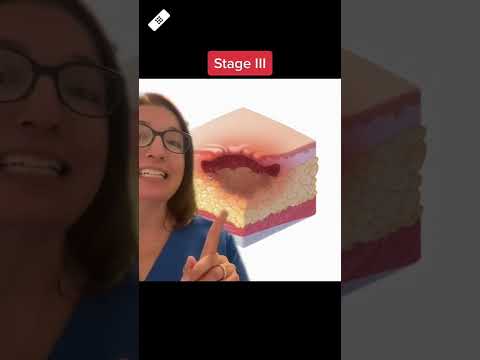
Training Principles
训练原则
| Variable | Range | Effect |
|---|---|---|
| Intensity | % of 1RM | Heavier → strength. Lighter → endurance. |
| Volume | Sets × Reps × Load | Higher volume drives hypertrophy up to a point. |
| Frequency | 2–6×/week | More frequent moderate sessions > one massive session. |
| Rest | 30 s – 5 min | Short rest = metabolic stress; long rest = force output. |
🎯TEST PREPBoard-exam essentials
- NPTECN Training variables: Intensity (heavy=strength, light=endurance), Volume (sets x reps x load; higher drives hypertrophy up to a point), Frequency (more frequent moderate > one massive session), Rest (short = metabolic stress, long = force output).
- NPTECN 1-RM percentage: ~85%+ = strength, ~67-85% = hypertrophy, ~67% and below = endurance (rough ranges).
- NPTECN Progressive overload: systematically increase weight/reps/sets or decrease rest; without it, no adaptation.
- Systematically increase demand over time — add weight, reps, sets, or decrease rest.
- Without progressive overload, the body has no reason to adapt.

🎯TEST PREPBoard-exam essentials
- NPTECN Principle: systematically increase the training demand over time (load, volume, or intensity) so the body must adapt.
- NPTECN Apply via: add weight, add reps/sets, reduce rest intervals, or progress exercise complexity/difficulty.
- NPTECN Overload must be progressive but balanced against recovery to avoid overtraining/injury — periodization spreads it out.
- Muscles produce more force eccentrically.
- This causes more micro-damage but also greater strength and hypertrophy stimulus — used in rehab for tendinopathy.

🎯TEST PREPBoard-exam essentials
- NPTECN Eccentric (lengthening) contractions produce MORE force than concentric/isometric.
- NPTECN Eccentrics cause more micro-damage but greater strength and hypertrophy stimulus — used in tendinopathy rehab (e.g., heavy slow resistance).
- NPTECN Higher eccentric load causes more delayed-onset muscle soreness (DOMS); progress carefully.
- Static stretching dose matters. Holds <45 s are harmless; ≥60 s can cut strength by ~7.5%. Dynamic warm-up should be the backbone.
拉伸关键看剂量:<45秒基本无害;≥60秒可使力量下降约7.5%。
Static stretching should not exceed ~20 seconds per hold — holding longer raises the risk of muscle and tendon injury. 静态拉伸每次不宜超过20秒,超过会增加肌肉和肌腱的损伤风险。

🎯TEST PREPBoard-exam essentials
- NPTECN Static stretch dose: holds <45 s are harmless; >=60 s can cut strength by ~7.5% (dose-dependent). Static stretching should not exceed ~20 s per hold — longer raises muscle/tendon injury risk.
- NPTECN Pre-exercise static stretching acutely reduces maximal strength ~5.4% and power ~1.9% (dose-dependent); long holds before max-effort lifting are a bad idea.
- NPTECN Dynamic warm-up should be the backbone; short stretches (<=45-60 s) essentially harmless and may reduce injury risk.
- Weeks 1–4: Neural adaptations — better motor-unit recruitment, firing rate, coordination.
- Weeks 4+: Structural changes — muscle hypertrophy becomes the main driver.
🎯TEST PREPBoard-exam essentials
- NPTECN Strength timeline: Weeks 1-4 = NEURAL adaptations (motor-unit recruitment, firing rate, coordination); Weeks 4+ = STRUCTURAL (hypertrophy becomes the main driver).
- NPTECN This means early strength gains are mostly neural, NOT muscle size — so clients should not expect visible growth in weeks 1-4.
- NPTECN Both neural and structural contributions continue throughout training; rate of gain slows as training advances (principle of diminishing returns).
Meta-analysis of 104 studies: pre-exercise static stretching acutely reduces maximal strength by ~5.4% and power by ~1.9% in a dose-dependent manner. Long holds (≥60 s) can cut strength up to 7.5%.
2024 meta-analysis of 83 studies: overall effect on isolated strength is small (ES −0.21); complex tasks like jumping and sprinting showed no significant reduction. Short static stretches may even help reduce injury risk.
Both sides agree: (1) long holds ≥60 s before max-effort lifting are a bad idea; (2) dynamic warm-up should be the backbone; (3) short stretches ≤45–60 s are essentially harmless.
Q1: Explain strength gains in weeks 1–4 when muscle size hasn't changed.
Q2: Coach says: "Stretching before practice makes you weak." Evidence-based reply?
Q3: Design the logic of an eccentric-loading plan for a calf strain using SAID.
Q4: "I train biceps with 100-rep light sets because slow fibers are fatigue resistant, so this builds max strength." Two errors?

Injury & Healing
损伤与愈合
| Term | What is damaged | Example |
|---|---|---|
| Sprain | Ligament | Ankle rolls inward |
| Strain | Muscle/tendon | Hamstring grab sprinting |
| Fracture | Bone cortex | Fall on outstretched arm |
| Stress fracture | Bone, repeated overload | Tibia pain in runners |
| Tendinopathy | Tendon (degenerative) | Jumper's knee |
| Concussion | Nervous tissue function | Head impact (functional injury) |
Sprain grades: I = overstretched. II = partial tear. III = complete rupture.
🎯TEST PREPBoard-exam essentials
- NPTECN Injury vocabulary: sprain = LIGAMENT; strain = MUSCLE/TENDON; fracture = bone cortex; stress fracture = bone (repeated overload); tendinopathy = tendon (degenerative, not inflammatory); concussion = functional nervous tissue injury.
- NPTECN Sprain grades: I = overstretched (mild, intact); II = partial tear; III = complete rupture.
- NPTECN Tendinopathy is a degeneration/pain condition, NOT acute inflammation — it does NOT 're-inflame' the way a strain does; load-managing exercise (not rest/anti-inflammatories) is the treatment.
- NPTECN ALWAYS clarify structure damaged: ligament=joint stability → taping/brace; muscle/tendon → progressive loading.
🎯TEST PREPBoard-exam essentials
- NPTECN Healing timeline: inflammatory (~0-7d: immune cells clear debris, starts repair — not the enemy) -> proliferative (~4-21d: fibroblasts lay type III collagen, capillaries sprout) -> remodeling (3wk-2yr: collagen reorganizes into type I along stress lines; LOAD directs alignment).
- NPTECN KEY exam point: remodeling is DRIVEN by controlled load — too little = weak disorganized scar; too much too soon = re-injury.
- NPTECN Immobilization (prolonged) → weaker, less-organized collagen; early controlled motion improves strength and orientation.
- Inflammatory: Immune cells clear debris. Starts repair — not the enemy.
- Proliferative: Fibroblasts lay down type III collagen; capillaries sprout.
- Remodeling: Collagen reorganizes into type I along stress lines. Load directs alignment.

P Protect · E Elevate · A Avoid anti-inflammatories · C Compress · E Educate
L Optimal Load · O Optimism · V Vascularisation · E Exercise

🎯TEST PREPBoard-exam essentials
- NPTECN PEACE & LOVE replaces old RICE/PRICE acute-management dogma.
- NPTECN PEACE (first 1-3 days): Protect, Elevate, Avoid anti-inflammatories, Compress, Educate.
- NPTECN LOVE (after the acute phase): Optimal Load, Optimism, Vascularisation, Exercise.
- NPTECN CRITICAL: AVOID anti-inflammatories (NSAIDs/ice) in the early phase — inflammation is needed for repair; the modern framework downplays ice and NSAIDs in favor of active load management. Ice use is now 'pain medicine' at best, not a routine.
- NPTECN Optimal Loading: move early, within pain tolerance, to stimulate healing — pain should guide intensity but not stop meaningful movement.
KEYCommon injuries & rehab by phase
- Ankle sprain — Grade I–III; proprioception/balance retraining
- Shoulder 肩袖 — Shoulder impingement 肩峰下撞击; empty-can (Jobe) test
- Knee ACL — Lachman test; phases of post-op rehab
- Patellar tendinopathy — Progressive heavy-slow resistance / eccentric loading
- CNS 脑卒中/脊髓损伤 — Stroke/SCI rehab phases: acute → recovery → sequelae
REDEmergency red flags
- Cauda equina — Bowel/bladder change + saddle anesthesia → urgent referral
- Stroke — Facial droop + slurred speech + weakness → activate emergency
- DVT — Unilateral calf swelling/warmth after immobilization → Wells criteria, no massage
🎯TEST PREPBoard-exam essentials
- NPTECN KEY injuries & tests: ankle sprain (ligament) → proprioception/balance retraining; shoulder impingement/rotator cuff → empty-can (Jobe) test; ACL → Lachman test; patellar tendinopathy → progressive heavy-slow resistance / eccentric loading.
- NPTECN RED FLAGS (urgent referral): cauda equina — bowel/bladder change + saddle anesthesia; stroke — facial droop + slurred speech + weakness; DVT — unilateral calf swelling/warmth after immobilization (Wells criteria, NO massage).
- NPTECN Phase-based rehab: acute → recovery → sequelae (esp. stroke/SCI); progress mobility → strength → function → return to sport with gradual load.
Q1: What question distinguishes a sprain from a strain — and why?
Q2: Grade II ankle sprain yesterday. Player wants aggressive stretching + daily NSAIDs for 2 weeks. Evaluate.
Q3: Why apply load during remodeling instead of total rest?

Recovery Science
恢复科学(含冰敷之辩)
🎯TEST PREPBoard-exam essentials
- NPTECN KEY STATS: <8h sleep = 1.7x injury risk; 65% of injured athletes are short sleepers vs 31% with >=8h. Chronic short sleep is the strongest independent predictor of injury in adolescent athletes.
- NPTECN Mechanism: deep (slow-wave) sleep pulses growth hormone (repair) and consolidates motor learning/memory.
- NPTECN PT recommendation: 8-10h for athletes; treat sleep as part of the training/recovery prescription (recovery 'toolbox' priority).
- Chronic short sleep is the strongest independent predictor of injury in adolescent athletes.
- Deep sleep pulses growth hormone and consolidates motor learning.
- Appears 12–24h after unfamiliar exercise, peaks 24–72h, fades by 5–7 days.
- Soreness reflects remodeling — not workout quality.
Repeated-bout effect: Second session of same exercise causes dramatically less damage. 重复训练后酸痛大幅减少。
Myth: "No pain, no gain" — soreness correlates poorly with gains. 酸痛与增肌相关性很弱。
🎯TEST PREPBoard-exam essentials
- NPTECN DOMS timeline: appears 12-24h after unfamiliar/eccentric exercise, peaks 24-72h, resolves by 5-7 days.
- NPTECN Soreness reflects muscle REMODELING, not workout quality — 'no pain no gain' is a myth; soreness correlates poorly with gains.
- NPTECN REPEATED-BOUT EFFECT: a second session of the same exercise causes dramatically less damage/soreness — relevant to program design & client expectation-setting.
| Method | Evidence | Finding |
|---|---|---|
| Sleep 8–10h | Strong | Lower injury risk; hormones, learning, repair |
| Nutrition | Strong | Protein + carbs restore muscle & glycogen |
| Active recovery | Moderate | Light aerobic eases soreness temporarily |
| Massage/foam roll | Mixed | Modest short-term soreness relief |
| Compression | Weak | Small soreness reduction; debated |
| Cold water immersion | Mixed | Reduces soreness BUT may blunt adaptation |

🎯TEST PREPBoard-exam essentials
- NPTECN Evidence grades: Sleep (STRONG), Nutrition (STRONG), Active recovery (MODERATE), Massage/foam roll (MIXED - modest short-term relief), Compression (WEAK), Cold water immersion (MIXED - reduces soreness BUT may blunt adaptation).
- NPTECN KEY DEBATE — ice/CWI: 10-15°C for 10-15 min reliably reduces soreness and allows more work on multi-session days, BUT a 12-week trial showed CWI blunted type II fiber CSA (+17% vs active recovery) and satellite-cell activation/mTOR signalling.
- NPTECN Practical verdict: use ice as PAIN MEDICINE (first 48h, short sessions), NOT an automatic ritual; for long-term adaptation skip routine ice baths; for next-day competition the tradeoff may be worth it.
- NPTECN PARENT LESSON: acute injury → ice limits swelling (first 48h); chronic adaptation → avoid routine CWI.
Q1: 65% short sleepers injured vs 31% — but "association, not proof." What confounders to rule out?
Q2: Basketball semifinals today, finals tomorrow. Star center wants ice bath after Game 1. Decision?
Q3: Explain the repeated-bout effect using a "construction crew" analogy.
Q4: "I never get sore anymore, so my workouts are useless." Two wrong assumptions?


Sports Nutrition
运动营养学(含合成代谢窗口之争)
| Macro | kcal/g | Function | Athlete target |
|---|---|---|---|
| Carb | ~4 | Fuels high-intensity; fills glycogen | 3–10 g/kg depending on load |
| Protein | ~4 | Builds/repairs tissue | 1.2–2.0 g/kg/day; 0.25–0.40 g/kg/meal |
| Fat | ~9 | Hormones; absorbs vitamins | ~20–35% of calories |
- Glycogen re-fill: ~5%/hour — early carbs matter between sessions.
🎯TEST PREPBoard-exam essentials
- NPTECN Macros: Carb ~4 kcal/g (fuels high-intensity, fills glycogen) target 3-10 g/kg by load; Protein ~4 kcal/g (build/repair) 1.2-2.0 g/kg/day, 0.25-0.40 g/kg/meal; Fat ~9 kcal/g (hormones, vitamin absorption) ~20-35% of calories.
- NPTECN Glycogen re-fill is ~5%/hour — early carbs between back-to-back sessions matter.
- NPTECN Protein dosing matters more than total alone in some contexts, but total daily protein (~1.6 g/kg/day plateau) is the dominant factor.
- EA = (intake − exercise cost) / FFM. Optimal ~45 kcal/kg FFM/day; below ~30 = RED-S (hormones, bone, immunity disrupted).

🎯TEST PREPBoard-exam essentials
- NPTECN Energy Availability (EA) = (energy intake - exercise energy expenditure) / fat-free mass (kg). Optimal ~45 kcal/kg FFM/day; below ~30 = RED-S (Relative Energy Deficiency in Sport).
- NPTECN RED-S consequences: disrupted HORMONES (low testosterone/estrogen), impaired BONE density (risk of stress fractures), and suppressed IMMUNITY.
- NPTECN KEY: low EA is the driver — not just low weight; treat by increasing intake and/or reducing exercise expenditure.
Iron: Carries O₂. Deficiency → fatigue.
Vit D + Ca: Bone building.
B-vitamins: Energy metabolism.
Hydration: Sweat 0.5–4 L/h. Performance drops at ~2% body-mass loss.
Start 500ml 2h before; replace 100–150% lost mass after.
Warning: Excess water → hyponatremia. 大量清水可致低钠血症。
🎯TEST PREPBoard-exam essentials
- NPTECN KEY STATS: sweat 0.5-4 L/h; performance drops at ~2% body-mass loss; drink 500ml 2h before exercise; replace 100-150% of lost mass after.
- NPTECN Micronutrients: Iron carries O2 (deficiency -> fatigue); Vitamin D + Calcium build bone; B-vitamins for energy metabolism.
- NPTECN RED FLAG: excess plain water -> hyponatremia (low sodium) — a real risk in endurance athletes; balance water with electrolytes.
- NPTECN KEY controversy: the post-workout 'anabolic window' — meta-analysis of 23 RCTs (when total protein controlled) found the 30-60 min window effect vanished; pre- vs post 25g whey gave identical hypertrophy. Total daily protein (~1.6 g/kg/day) is king; per-meal 0.25-0.40 g/kg over 3-5 meals.
Q1: 60-kg soccer player, 90 min/day high intensity. Daily carb + protein targets?
Q2: Friend panics: "40 min post-workout, no protein — window closed!" Reassure him.
Q3: Runner with stress fractures eats 1,600 kcal/day, burns 700 in training. Why?
Q4: Wrestler lost 1.4kg fluid. Plans to chug 4L water in 30 min. Evaluate.

Supplements & Evidence Grading
补剂与证据分级
Meta-analyses
↓
RCTs
↓
Cohort studies
↓
Lab/animal & case reports
↓
Anecdotes & ads
🎯TEST PREPBoard-exam essentials
- NPTECN Evidence hierarchy: Meta-analyses (top) > RCTs > Cohort studies > Lab/animal & case reports > Anecdotes & ads (bottom).
- NPTECN Evaluate claims by evidence level FIRST — marketing and personal testimonials are the weakest forms.
- NPTECN For supplements, demand RCT/meta-analysis support + third-party testing before recommending.
| Supplement | Grade | Summary |
|---|---|---|
| Creatine | A | Most effective legal ergogenic; 3–5 g/day |
| Protein powder | A | Helps hit daily target; not magic |
| Caffeine | A-/B+ | 3–6 mg/kg pre-exercise; individual response |
| Vitamin D / iron | B | Only if deficient; bloodwork first |
| BCAAs | D | Redundant if total protein adequate |
| Fat burners / boosters | F | No credible support; doping risk |


🎯TEST PREPBoard-exam essentials
- NPTECN KEY GRADES: Creatine = A (most effective legal ergogenic, 3-5 g/day); Protein powder = A (helps hit daily target, not magic); Caffeine = A-/B+ (3-6 mg/kg pre-exercise, individual response); Vitamin D/iron = B (only if deficient, bloodwork first); BCAAs = D (redundant if total protein adequate); Fat burners/boosters = F (no credible support, DOPING RISK).
- NPTECN SAFETY CHECKLIST: third-party tested? (NSF / Informed Sport); adolescents: food first; if it sounds magical -> it is marketing.
- NPTECN Creatine is the flagship evidence-supported supplement — safe, effective for strength/power/sprint work.
1. Third-party tested? (NSF / Informed Sport)
2. Adolescents: food first.
3. If it sounds magical → marketing.
Q1: Rank by evidence: (a) Uncle swears fat burners. (b) Meta-analysis: creatine +2kg lean mass. (c) 8-mouse study. (d) 5000-runner cohort: vitamin D = lower injuries.
Q2: 16-year-old wrestler wants a supplement stack. What do you approve/refuse?
Q3: "BCAAs are essential, so extra BCAAs must build more muscle than whey." Errors?


Ethics & Professional Responsibility
伦理与法律,是执业的第一道准入
Safety, ethics, and professional responsibility go hand-in-hand with the career and professional-development material in Ch 11 · Rehab & Career. This covers patient-handling precautions, infection control, legal foundations, HIPAA, ethics principles, delegation lines (PT/PTA/aide), clinic emergencies, reimbursement, and documentation — rule-based knowledge you use daily in any setting.
- Standard precautions apply to EVERY patient as the baseline: treat all blood and body fluids as potentially infectious. Transmission-based precautions add layers based on the suspected route.
| Precaution | PPE / room | Typical pathogens |
|---|---|---|
| Standard | Gloves for fluid contact; gown, mask, eye protection as needed | All patients |
| Contact | Gown + gloves; dedicated/cleaned equipment; hand hygiene — for C. difficile use SOAP and WATER (alcohol gel does NOT kill spores) | MRSA, VRE, C. difficile, RSV |
| Droplet | Surgical mask, stay within 6 feet (about 2 m) of patient; mask when providing care | Influenza, meningitis, pertussis, COVID-class respiratory viruses |
| Airborne | Fit-tested N95 respirator; negative-pressure room; door closed | TB, varicella, measles (rubeola) |
Precaution types (memorize the pairings)
KEYHand hygiene & PPE practice
- Perform hand hygiene before and after every patient, and between dirty and clean tasks (the 'five moments').
- PPE donning order: gown, then mask/respirator, then goggles/face shield, then gloves. Doffing order (to avoid contamination): gloves, then goggles/face shield, then gown, then mask/respirator — with hand hygiene between steps.
- Needlestick/contaminated exposure: wash the area immediately with soap and water (eyes with saline/water), report to the supervisor and employee health without delay, and follow post-exposure prophylaxis protocol.
- Disinfect treatment tables, plinths, and shared equipment between patients; single-use items are never reused.
- Screen when history suggests rash, cough, fever, or known infection — postpone or protect per policy.
⛔Trap to remember
C. difficile: alcohol hand gel is ineffective against spores — wash with soap and water. This exact nuance appears repeatedly on the exam.
🎯TEST PREPBoard-exam essentials
- NPTECN Standard precautions = EVERY patient, treat all blood/body fluids as infectious (baseline).
- NPTECN Contact -> gown + gloves (MRSA, VRE, C. diff, RSV) — C. difficile requires SOAP & WATER (alcohol gel does NOT kill spores).
- NPTECN Droplet -> surgical mask within 6 ft (influenza, meningitis, pertussis). Airborne -> fit-tested N95 + negative-pressure room (TB, varicella, measles).
- NPTECN KEY distinction: airborne needs N95 + negative pressure; contact/droplet do not.
- Safe patient handling protects the patient AND the therapist — staff back injuries are a leading cause of PT work loss.
- Modern practice replaces manual lifting with equipment whenever possible.
- Use mechanical lifts (full-sling, stand-assist), ceiling lifts, slider boards, and gait belts for transfers; a single therapist should NOT attempt lifting heavy dependent patients alone.
- Before any transfer: lock the wheelchair/set up the destination, position the patient's feet, use a gait belt snugly, and coordinate (count of three).
- Use your legs and wide base of support, keep the load close to your body, avoid twisting, and do not depend on upper-body strength alone.
- Check equipment before use: wheelchair brakes and armrests, walker/cane tips, plinth straps, and pin locks.
- Clinical falls: ensure call light within reach, side rails per policy, bed/tilt alarms for high-risk patients, hourly rounding, and a fall-risk flag on the chart.
⚠️Precaution
Never work out of habit — re-check the brakes, re-check the belt, re-check clearance before every single ambulation or transfer.
🎯TEST PREPBoard-exam essentials
- NPTECN Modern practice: use equipment (mechanical/ceiling lifts, slider boards, gait belts) instead of manual lifting; ONE therapist should NOT lift heavy dependent patients alone.
- NPTECN Before transfer: lock wheelchair/destination, set feet, snug gait belt, coordinate (count of three).
- NPTECN Body mechanics: use legs + wide base of support, keep load close, avoid twisting, don't rely on upper-body alone.
- NPTECN Check equipment before use (wheelchair brakes, sling integrity, lift capacity).
KEYLicensure & scope
- You practice under the state practice act; scope of practice, supervision requirements, and delegation rules vary by state — PTs should know their own act and endorse/compact privileges context.
- Practice outside your competence is an ethical and legal violation — refer or seek training.
KEYInformed consent
- Elements: explanation of the proposed treatment, its risks and benefits, reasonable alternatives, and the right to refuse or withdraw at any time — given to a patient who is competent and volitional.
- Who consents: the patient if competent; a surrogate/legal guardian for minors or incapacitated adults; emergency treatment may proceed under implied consent.
- Refusal of treatment does not end your duty — you reassess, explain consequences clearly, document the refusal, and offer alternatives.
- Advance directives and DNR must be respected during treatment unless a valid in-the-moment order directs otherwise.
KEYDocumentation as a legal record
| Rule | Detail |
|---|---|
| Timeliness | Write on the day of service; late notes flagged as late and placed per policy |
| Corrections | Single strike-through, initial, date — never erase, whiteout, or rewrite silently |
| Additions | New entries dated/signed; never insert into an already-signed note |
| Accuracy | Objective, measurable, functional; no vague comments or copy-paste errors |
| Defensibility | If it is not documented, it was not done — document what you did and the patient's response |
Documentation rules
⚠️Rule
- Altering a record after a complaint to look 'cleaner' is fraud-adjacent and destroys your defense.
- The correct response to an error is a dated, signed addendum.
🎯TEST PREPBoard-exam essentials
- NPTECN Licensure: practice under your state practice act; scope/supervision/delegation vary by state; practicing beyond competence = ethical + legal violation.
- NPTECN Informed consent elements: proposed treatment, risks/benefits, reasonable alternatives, right to refuse/withdraw — to a competent, volitional patient.
- NPTECN Who consents: patient (competent); surrogate/guardian (minors/incapacitated); emergency -> implied consent.
- NPTECN Treatment refusal is the patient's RIGHT (autonomy) — respect it after full explanation.
- HIPAA protects patient privacy: protected health information (PHI) must not be shared without authorization except for treatment, payment, and healthcare operations. The exam tests everyday scenarios, not legal trivia.
| Scenario | Allowed? | Reason |
|---|---|---|
| Talking to the patient in private room | Allowed | Necessary for treatment |
| Discussing the case in the corridor with your colleague where others can hear | NOT allowed | Reasonable safeguards required |
| Sending records to the referring physician | Allowed | Treatment-related disclosure |
| Sharing info with the patient's employer without authorization | NOT allowed | Not treatment/payment/operations |
| Leaving PHI printouts on a shared desk unattended | NOT allowed | Safeguards required |
HIPAA quick facts
KEYOther communication duties
- Records released only with valid patient authorization or permitted purpose; verify identity before giving information over the phone.
- Use of interpreters: prefer trained/medical interpreters particularly for sensitive content; be cautious using family as interpreters for confidential matters.
- Health literacy: use teach-back (ask the patient to repeat instructions in their own words) and plain language.
- SBAR for handoffs: Situation, Background, Assessment, Recommendation — concise and complete.
⚠️Ethics flag
HIPAA applies to incidental overhearing differently than intentional browsing. Looking up a patient you are NOT treating, out of curiosity, is a violation even if you tell no one.
🎯TEST PREPBoard-exam essentials
- NPTECN HIPAA: PHI may be shared without authorization only for TREATMENT, PAYMENT, and HEALTHCARE OPERATIONS.
- NPTECN Not allowed: discussing cases in corridor where others can hear; sharing info with employer without authorization; leaving PHI printouts where visible.
- NPTECN Allowed: private-room discussion, sending records to referring physician (treatment-related).
- NPTECN Apply 'reasonable safeguards' principle to everyday scenarios the exam tests.
| Principle | Meaning | PT example |
|---|---|---|
| Autonomy | Patient has the right to choose and refuse | Respect a refusal of treatment after full explanation |
| Beneficence | Act in the patient's best interest | Progress the plan toward the patient's goals |
| Nonmaleficence | Do no harm; avoid exposing patient to harm | Recognize contraindications and stop exercises that hurt |
| Justice | Fair and equitable distribution of care | Do not let personal bias affect who gets your best effort |
| Fidelity | Faithfulness to promises and relationships | Follow through on the plan and commitments you made |
| Veracity | Truthfulness with patients | Honest discussion of prognosis and progress |
Core bioethics principles
KEYResolving an ethical dilemma (process the exam likes)
- Identify the problem and who is affected; gather relevant facts; identify principles that conflict; generate options; weigh consequences; choose the best ethically-supported action; evaluate the outcome.
- Ethical vs legal vs moral: something can be legal but unethical (e.g. a policy that discriminates) or ethical but legally ambiguous — the exam distinguishes these axes.
- Cultural competence: respect values and beliefs, use appropriate interpreters, adapt communication without abandoning standard of care.
💡Pearl
- When two ethical duties collide, the strongest answer on the exam is usually the one that protects patient safety and then preserves the patient's autonomy with full information.
🎯TEST PREPBoard-exam essentials
- NPTECN 6 bioethical principles: Autonomy (choose/refuse), Beneficence (act in best interest), Nonmaleficence (do no harm), Justice (fair distribution), Fidelity (faithfulness/commitments), Veracity (truthfulness).
- NPTECN Clinical translation: respect refusal (autonomy); recognize contraindications & stop harmful exercise (nonmaleficence); don't let bias affect effort (justice).
- NPTECN Dilemmas are resolved by weighing principles against each other for the specific patient, not memorized absolute rules.
- Suspected abuse of children, elders, or vulnerable adults MUST be reported to the designated state agency — you do NOT need proof, and you do NOT confront the family first.
- Report signs: unexplained injuries, contradictory stories, neglect (dehydration, pressure ulcers, untreated medical needs), unusual fear or withdrawal.
- Impaired or incompetent colleagues suspected of endangering patients should be reported through facility and state channels.
- Duty to warn (Tarasoff): if a patient poses a serious, imminent threat of harm to a specific identifiable person, you may have a duty to warn that person/authorities — facility policy and state law govern the exact steps.
- Sexual misconduct and boundary violations are zero-tolerance: no romantic/sexual relationships with current patients, no exploitative gifts, and clear professional boundaries.
⛔Rule
- Abuse reporting is a duty, not a choice, and it survives confidentiality. 'I was not sure' is not a valid reason to stay silent when signs are present.
🎯TEST PREPBoard-exam essentials
- NPTECN Suspected abuse of children/elders/vulnerable adults MUST be reported to the state agency — you do NOT need proof and do NOT confront the family first.
- NPTECN Signs: unexplained injuries, contradictory stories, neglect (dehydration, pressure ulcers, untreated needs), unusual fear/withdrawal.
- NPTECN Impaired/incompetent colleagues endangering patients -> report through facility + state channels.
- NPTECN DUTY TO WARN (Tarasoff): if patient poses serious imminent threat to a specific identifiable person, you may have a duty to warn that person/authorities (per state law/policy).
| Role | May do | May NOT do |
|---|---|---|
| Physical Therapist (PT) | Perform examination/evaluation, determine diagnosis and prognosis, develop and revise the plan of care, set goals, perform the initial and discharge assessments, make discharge decisions | Nothing out of scope for a PT |
| Physical Therapist Assistant (PTA) | Implement the established plan of care under the direction/supervision of a PT (interventions, data collection, reinforcement of caregiver training) | Evaluation, plan-of-care development, re-examination/reassessment that changes the plan, discharge decision-making, and unsupervised goal changes |
| Rehabilitation aide / tech | Non-skilled tasks: setting up equipment, cleaning, transporting, clerical, under supervision | Any skilled intervention requiring professional judgment |
The delegation lines the exam loves
KEYSupervision rules to remember
- The PT remains responsible for the plan and its outcome even when a PTA delivers treatment — supervision requirements (on-site vs general) vary by state; know the difference and comply.
- A PTA communicates findings to the PT; any change that would alter the plan triggers a PT re-assessment.
- An aide/tech can help physically but never performs skilled care independently.
- Discharge is the PT's call; the PTA reinforces teaching but does not make the discharge decision.
⚠️Trap
- The exam distinguishes the aide (non-skilled, supervised) from the PTA (skilled, under PT direction/ supervision) from the PT (evaluator and planner). If a question says 'the assistant should evaluate/decide,' that is the wrong answer.
🎯TEST PREPBoard-exam essentials
- NPTECN PT: owns evaluation/examination, diagnosis/prognosis, develops & revises plan of care, initial/discharge assessments, discharge decisions.
- NPTECN PTA: implements established plan under PT direction/supervision, collects data, reinforces caregiver training — but CANNOT evaluate, develop/change plan, re-examine that changes plan, discharge, or change goals unsupervised.
- NPTECN Aide/tech: non-skilled tasks only (set up equipment, cleaning) — no skilled interventions or evaluation.
- NPTECN Delegation must stay within legal scope and the delegate's competence; supervision standards vary by state.
| Event | Immediate response |
|---|---|
| Fire | RACE: Rescue those in immediate danger, Alarm (activate), Contain (close doors), Extinguish/Evacuate per facility plan |
| Cardiac arrest | Call for help, start CPR (compressions approx 100-120/min, 2 inches deep), use the AED as soon as available; continue until EMS takes over |
| Choking | Determine if patient can cough/speak; perform back blows and abdominal thrusts (Heimlich) if airway is blocked; call help if ineffective |
| Seizure | Ease to the floor, protect the head, clear hazards, do NOT restrain or put anything in the mouth; time the seizure; post-ictal: position, monitor, document |
| Syncope | Lay patient supine, elevate legs, check responsiveness/airway, monitor vital signs; if diabetic, suspect hypoglycemia and check blood glucose |
| Hypoglycemia | Give 15 g fast-acting carbohydrates (juice, glucose tabs); recheck in 15 minutes; repeat if still low; escalate if unable to swallow or unconscious |
| Anaphylaxis | Signs: hives, stridor/wheeze, angioedema, hypotension. Call for help and use the facility epinephrine auto-injector per protocol; keep patient supine with legs up if tolerated |
Emergency drills PTs should master
- Know where the AED, first-aid kit, oxygen (if stocked), and emergency equipment are, and who to call (code blue / medical emergency) in your clinic.
- Incident reports after any adverse event: factual, objective, blame-free, timely — what happened, what you observed, what was done.
- Two identifiers (name + DOB, or per facility) before every treatment and transfer.
⛔Deadly misconception
- Never put anything in the mouth of a seizing patient and never restrain the seizure — the classic wrong answer choices on the exam.
🎯TEST PREPBoard-exam essentials
- NPTECN Fire -> RACE: Rescue, Alarm, Contain, Extinguish/Evacuate.
- NPTECN Cardiac arrest -> call help, CPR (100-120 compressions/min, ~2 inches deep), use AED ASAP until EMS.
- NPTECN Choking -> if can't cough/speak, back blows + abdominal thrusts (Heimlich); call help if ineffective.
- NPTECN Seizure -> ease to floor, protect head, clear hazards, do NOT restrain or put anything in mouth; time it; post-ictal position + monitor + document.
- NPTECN Syncope -> lay supine, elevate legs, check responsiveness/airway.
- Medicare Part A covers inpatient (hospital, SNF) care; Part B covers outpatient services including PT; therapy must be medically necessary and progress-capable.
- Documentation must support the billed codes: CPT codes describe the services, modifiers and units matter, and 'incident-to' billing has specific physician-supervision requirements.
- Fraud and abuse: upcoding (billing a higher service than given), unbundling (billing components separately to inflate payment), fabrication of records — all zero tolerance and grounds for exclusion from Medicare.
- Medical necessity and skilled care: sessions billed must be performed by an appropriately qualified provider and be necessary — maintenance 'only' programs require specific documentation rules.
- When you see a billing pattern that looks wrong, report through the facility compliance channel — silence makes you part of it.
⚠️Rule
- The patient's payer information is never a reason to change the plan of care; and your notes must match what you actually did and why — that is the backbone of every reimbursement audit.
🎯TEST PREPBoard-exam essentials
- NPTECN Medicare: Part A = inpatient (hospital/SNF); Part B = outpatient incl. PT; therapy must be medically necessary and progress-capable.
- NPTECN Fraud/abuse are ZERO TOLERANCE: upcoding (billing higher than delivered), unbundling (splitting components to inflate payment), fabrication of records -> exclusion from Medicare.
- NPTECN CPT codes describe services; modifiers + units matter; 'incident-to' has supervision requirements. Documentation must support billed codes.
- NPTECN Billed sessions must be by an appropriately qualified provider and medically necessary (maintenance without progress potential is generally not covered).
- The NPTE increasingly tests functional, patient-centered thinking. The ICF (International Classification of Functioning) frames problems in three layers: body structure/function, activity, and participation — plus personal and environmental factors. Intervention goals are written to function, not just diagnosis.
KEYICF levels in action (know the label for each)
- Body structure/function: muscle strength 3/5, ROM limitation, pain intensity.
- Activity: walking distance, stair negotiation, ADL performance.
- Participation: returning to work, sports, community life.
- Contextual factors: home stairs, caregiver support, equipment, patient beliefs — they enable or barrier function.
KEYDocumentation & goals
- Write SMART goals: Specific, Measurable, Achievable, Relevant, Time-bound (e.g. 'ambulate 150 feet with a rolling walker, contact-guard assist, within 3 weeks').
- Document objective, functional measurements (gait speed, 6MWT, TUG, ROM/MMT) at baseline and intervals — outcomes justify the plan.
- Use outcome measures with known cutoffs (e.g. TUG greater than 13.5 seconds = fall risk; Berg balance below 45/56 = increased risk; gait speed below about 0.8 m/s = falls/mobility concern).
- Continue competence: CEUs, staying current with evidence-based practice, and honest referral when outside your expertise.
💡Pearl
When an exam question gives you impairment (weakness), activity (can't walk), and participation (can't return to sport), choose the goal written at the FUNCTIONAL level — that is where the NPTE wants your intervention aimed.
🎯TEST PREPBoard-exam essentials
- NPTECN ICF model frames problems at THREE levels: body structure/function, activity, and participation + personal/environmental contextual factors.
- NPTECN Know the label: body structure/function = strength/ROM/pain; activity = walking/ADL; participation = work/sports/community; contextual = home stairs/caregiver/beliefs.
- NPTECN Write goals to FUNCTION, not just diagnosis (patient-centered, ICF-aligned).
- NPTECN Documentation supports the ICF narrative: objective measures (goniometer/MMT/scores) and functional impact.
| Type | PPE |
|---|---|
| Contact | Gown + gloves |
| Droplet | Surgical/medical mask |
| Airborne | Fit-tested N95, negative-pressure room |
| Standard | Gloves + as indicated (gown, mask, eye protection) |
Precaution types and PPE at a glance
| Element | In plain terms |
|---|---|
| Duty | A provider-patient relationship existed, creating a duty of care |
| Breach | The duty was breached (care fell below the standard) |
| Causation | The breach caused the harm |
| Damages | Actual harm or loss resulted |
Four elements of negligence
| Task | PT | PTA | Aide |
|---|---|---|---|
| Evaluate / re-examine | Yes — owns it | No | No |
| Develop & change plan of care | Yes | No (implements) | No |
| Implement skilled interventions | Yes | Yes under PT direction | No |
| Discharge decision | Yes | No | No |
PT vs PTA vs aide: who does what
🎯TEST PREPBoard-exam essentials
- NPTECN Precaution/PPE recall: Contact=gown+gloves; Droplet=surgical mask; Airborne=fit-tested N95+neg-pressure; Standard=gloves+as indicated.
- NPTECN 4 elements of negligence: DUTY (relationship existed) + BREACH (fell below standard) + CAUSATION (breach caused harm) + DAMAGES (actual harm).
- NPTECN Delegation ownership: Evaluate/re-examine & develop plan = PT only; Implement skilled interventions = PTA; Aide = no skilled tasks.
- NPTECN Rapid-fire review table is high-yield for the NPTE/CN boards — memorize the three tables.
Q1: A colleague shows you a patient photo “just for education” without consent. What quadrant of ethics/HIPAA does this violate?
Q2: Why can’t a PT aide set or modify the plan of care?
Q3: A patient refuses your recommended exercise program. What does informed consent require you to do?

Becoming a Physical Therapist
成为物理治疗师
🎯TEST PREPBoard-exam essentials
🎯TEST PREPBoard-exam essentials

Treat: Progressive exercise, manual therapy, load management.
Start today: Training log, read 1 study abstract/week, volunteer.
🎯TEST PREPBoard-exam essentials
Q1: Write your 8-year timeline to licensed PT with measurable goals. Most fragile stage?
Q2: "PTs barely earn more than personal trainers — why 7 years of school?"
Assessment · 康复评定学
先评定,再治疗;再评定,才知进步
Assessment (康复评定) measures function, impairments, and limitations to set goals and guide treatment. It extends the injury and rehab material from Ch 6 · Soft Tissue & Injury and Ch 11 · Rehab & Career, and dovetails with the practical exam skills of the 运动康复师 certification: MMT, goniometry, muscle tone, balance, sensation, gait, and cognition.
Content is for educational and exam preparation purposes only and is not a substitute for clinical judgment or current evidence-based guidelines.
- Rehabilitation assessment (康复评定) is the measurement and analysis of a patient’s function, impairments, activity limitations, and participation restrictions. It is the foundation of the rehab process: you assess first, then set goals, then plan and dose treatment, then re-assess to measure progress. “No assessment, no treatment goal; no re-assessment, no objective result.”
- The core assessment battery (核心评定组合) maps to body structure/function, activity, and participation. A complete evaluation typically covers: muscle strength, range of motion, muscle tone, balance, sensation, gait, cognition, and pain. Each domain has standard tools with known reliability, normal values, and reference ranges.
KEYAssessment drives every clinical decision
- Assess before treat — Never begin a program without baseline measures
- Set SMART goals — Specific, Measurable, Achievable, Relevant, Time-bound
- Re-assess objectively — Repeat the same measure to document change over time
- Match tool to domain — Mobility→10MWT/TUG, balance→Berg/DGI, ADL→FIM/Barthel
✅Exam Pearl: Outcome-Measure Selection
The most common assessment error is using the wrong tool for the domain. Mobility→gait speed/TUG; balance→Berg (functional) or DGI (with task complexity); ADL→FIM or Barthel; spasticity→Modified Ashworth; cognition after TBI→Rancho; SCI severity→ASIA; motor recovery post-stroke→Brunnstrom. Match first, then measure.
🎯TEST PREPBoard-exam essentials
- Manual Muscle Testing (MMT / 徒手肌力检查) grades isolated voluntary muscle strength on a 0–5 (or O–V) scale. Correct technique requires: the proper starting position, fixation of the proximal segment, and isolation of the target muscle. Consistency between testers matters because MMT is inherently subjective.
- MMT grades: 0 = no contraction; 1 = trace, a flicker of contraction seen/palpated; 2 = movement with gravity eliminated; 3 = movement through full ROM against gravity; 4 = movement against gravity plus some resistance; 5 = normal strength against maximal resistance. Grades 4 and 5 are the most difficult to distinguish reliably.
KEYMMT grading at a glance (0–5)
| Grade | Description |
|---|---|
| 0 | No visible or palpable contraction |
| 1 (trace) | Flicker of contraction; no joint motion |
| 2 (poor) | Full ROM with gravity eliminated |
| 3 (fair) | Full ROM against gravity |
| 4 (good) | Full ROM against gravity + some resistance |
| 5 (normal) | Full ROM against maximal resistance |
MMT 0–5 grading scale
⛔Red Flag: Stop When Painful or Provocative
Never push a muscle into pain, cramping, or substitution during MMT. Pain and substitution invalidate the measurement and risk injury. Document any pain, weakness, or referral pattern and re-test with a graded (break) technique.
🎯TEST PREPBoard-exam essentials
- Range of motion (ROM / 关节活动度) is measured with a goniometer (量角器) for most limb joints. Correct method: align the fulcrum over the joint axis, the stationary arm along the proximal segment, and the moving arm along the distal segment; read on the correct side (flat side toward the patient). Always compare to the uninvolved side.
KEYKey goniometric points
- Active vs passive — A-ROM = patient self-motion; P-ROM = examiner moves joint, assesses end-feel
- End-feel — Soft (soft-tissue approximation), firm (capsular/ligamentous), hard (bony)
- Hypomobility vs hypermobility — Distinguish restriction from instability; both alter exercise dosing
- Contracture — Fixed shortening of muscle/tendon/capsule; distinguish from spasticity
- Contracture types — Flexion contracture (most common), extension, abduction/adduction, rotational
⛔Contraindication: Aggressive Stretching
Prolonged or aggressive stretching can tear muscle/tendon, especially in a neurologically impaired or immobilized limb. Respect end-feel: if capsular end-feel is hard and bony, do not force. Rule of thumb: static holds that exceed ~20 s risk tissue damage in vulnerable patients.
🎯TEST PREPBoard-exam essentials
- Muscle tone (肌张力) abnormalities are classified as spasticity, rigidity, or flaccidity. Spasticity (痉挛) is velocity-dependent resistance from an UMN lesion; rigidity (僵硬) is velocity-independent resistance (e.g., Parkinson’s gear/cogwheel), often with tremor; flaccidity (弛缓) is low tone from an LMN or acute lesion.
KEYBalance & sensation essentials
- Balance depends on — Support surface, base of support, center of gravity, stability limits
- Berg Balance Scale — 14 items, 0–56; score <45 → increased fall risk
- Sensation types — Superficial 浅 (pain/temp/touch), deep 深 (proprioception/vibration/pressure), composite 复合 (stereognosis/two-point)
- Sensory testing — Test dermatomes bilaterally; document level of sensory loss
- Rigidity vs spasticity — Rigidity = constant, plastic/cogwheel; spasticity = velocity-dependent catch-and-release
✅Pearl: Berg cutoff & fall prediction
TUG >13.5 s and Berg <45 are the two highest-yield fall-risk cutoffs on licensure exams. Memorize both. Also remember: balance-training should stress the support surface and challenge stability limits, not just stand on floor.
🎯TEST PREPBoard-exam essentials
- Gait (步态) analysis divides the cycle into stance (支撑相, ~60%) and swing (摆动相, ~40%). Key sub-phases of stance: heel strike, loading response, mid-stance, terminal stance, pre-swing. Observational gait analysis assesses symmetry, cadence, step/stride length, base of support, and arm swing, with kinematic (motion) and kinetic (force/GRF) perspectives.
KEYCognition & outcome measures
- Cognition domains — Agnosia 失认, aphasia 失语, attention 注意, memory 记忆, executive function 执行功能
- 10MWT — Community ambulation cutoff ≈ 0.8 m/s; measures gait speed
- TUG — Time to stand, walk 3 m, return, sit; >13.5 s = fall risk
- FIM / Barthel — ADL performance; FIM 18 items 1–7; Barthel 0–100 (>60 = independence)
- GBS / DGI / BBS — Gait abnormalities scale; Dynamic Gait Index; Berg Balance Scale
⛔Gait Red Flags
A sudden change in gait with falls, foot-drop (ankle weakness), a broad-based stance, or an unsteady ataxic pattern warrants medical referral. Recurrent stumbling or “catching” toes suggests dorsiflexor weakness — test ankle DF strength and check for a sciatic/personal-nerve pattern.
🎯TEST PREPBoard-exam essentials
- A systematic assessment flow keeps you complete and consistent: (1) history & subjective screen, (2) observation & posture, (3) active/passive/accessory motion & muscle tests, (4) specialized tests & functional measures, (5) document findings, (6) set goals and plan, (7) re-assess progress.
KEYExam flow: stop, look, listen
- Screen first — Red flags (cauda equina, DVT, fracture) override the full battery
- Compare both sides — Symmetry is the fastest clue to a real impairment
- Document objectively — Numbers, not adjectives — record goniometer/MMT/scale scores
- Re-measure — Progress requires repeating the SAME measure at the SAME time of day
✅Pearl: assessment is the intervention’s blueprint
The differential widens with every test you skip. A thorough, ordered assessment not only establishes baseline but also prevents over- or under-dosing exercise. When in doubt, re-measure rather than guess.
🎯TEST PREPBoard-exam essentials
Q1: A goniometric measurement reports the scapula was not stabilized during shoulder flexion. How does this bias the result?
Q2: A patient with a UMN lesion has high tone and hyperreflexia, while an LMN lesion causes flaccidity. Explain the mechanism for the difference.
Q3: A TCM-constitution screen labels a client qi-deficiency, and cupping marks alarm them. How do you respond within your scope?


TCM · 中医健康管理
阴阳平衡,气血调和;辨证论治,未病先防
TCM (中医健康管理) offers a pattern-based, preventive view of health that complements evidence-based sports science. It builds on the recovery physiology of Ch 7 · Recovery Science and the nutrition concepts of Ch 8 · Nutrition: yin-yang and qi-blood-fluids, meridians and acupoints, tuina and moxibustion, the nine constitutional types, and safe integration into sports recovery.
Content is for educational and exam preparation purposes only and is not a substitute for clinical judgment or current evidence-based guidelines.
- Traditional Chinese Medicine (TCM / 中医) sees the body as an integrated whole governed by yin and yang (阴阳) — two opposing yet interdependent forces.
- Health is balance; disease arises from imbalance.
- Qi (气), blood (血) and body fluids (津液) are the functional bases that nourish and move the body.
KEYCore TCM concepts
- Yin 阴 — Cooling, nourishing, structural, night, inward; deficiency → heat signs (dry mouth, night sweats)
- Yang 阳 — Warming, activating, functional, day, outward; deficiency → cold signs (cold limbs, fatigue)
- Qi 气 — Vital energy that moves, warms, defends, and holds; qi deficiency → fatigue, shortness of breath
- Blood 血 — Nourishes organs/tissues; blood deficiency → pale, dizziness, poor sleep
- Body fluids 津液 — Moisten joints, skin, orifices; fluid-damp → swelling, heaviness, phlegm
💡TCM meets sport: fatigue as qi deficiency
In a sports-medicine context, chronic low energy, poor recovery, and repeated illness are often framed as qi deficiency (气虚). The practical takeaway is the same as evidence-based sports science: prioritize sleep, balanced nutrition, and progressive load — but TCM adds pattern-based individualized guidance.
🎯TEST PREPBoard-exam essentials
- Meridians (经络) are the pathways through which qi and blood circulate.
- There are 12 regular meridians (十二正经), each paired with an organ system, plus 8 extraordinary vessels.
- Acupoints (穴位) are specific points on the meridians used in acupuncture (针灸), acupressure, and tuina (推拿) for pain relief and health management.
KEYCommon pain points in sports
- He Gu (LI4) 合谷 — First dorsal web of the hand; general pain/headache/cold
- Zu San Li (ST36) 足三里 — Below the knee, lateral fibula/ST; strengthens digestion & immunity, fatigue
- San Yin Jiao (SP6) 三阴交 — Medial lower leg above the medial malleolus; gynecologic, damp-cold, lower-limb fatigue
- Tai Chong (LR3) 太冲 — Dorsum of the foot proximal to the 1st-2nd metatarsal; stress, anger, BP
Tuina (推拿) is manual therapy using rolling (滚法), kneading (揉法), pressing (按法), and stroking/grasping (拿法) techniques. It is widely used for muscle tension, sports recovery, and managing chronic pain. Contraindications overlap with Western manual therapy: acute fracture, infection, severe osteoporosis, skin lesions, and suspected DVT.
⛔Tuina Contraindication: DVT & Red Skin
Never perform vigorous massage/tuina over a limb with suspected deep vein thrombosis (unilateral calf swelling, warmth, pain) — risk of embolization. Also avoid areas of broken skin, cellulitis, burns, or acute fracture. When in doubt, refer and document.
🎯TEST PREPBoard-exam essentials
- Moxibustion (艾灸) applies heat from burning moxa (mugwort) near acupoints to warm and tonify yang, and is used for cold-pattern conditions and pain.
- Gua sha (刮痧) and cupping (拔罐) are surface therapies that stimulate blood flow and relieve muscle tension; they are common in sports recovery settings.
KEYWarm vs cold applications
- Moxibustion (warm) 艾灸 — Cold-pattern: chills, cold limbs, chronic pain eased by heat; tonifies yang
- Cold compress (cool) 冷敷 — Acute injury, swelling, inflammation; reduce blood flow
- Cupping 拔罐 — Negative pressure → local hyperemia, loosens fascia; leaves circular marks
- Gua sha 刮痧 — Scraping to the skin; treats stagnant qi/blood; petechiae expected
⚠️Educate on marks & aftercare
Cupping and gua sha intentionally produce marks/petechiae. Explain this beforehand (informed consent), warn against applying over acute inflammation, broken skin, or anticoagulated areas, and advise hygiene. Marks are not bruises from trauma and resolve in days.
🎯TEST PREPBoard-exam essentials
- TCM classifies people into constitutional types (体质) based on their stable physical and behavioral profile.
- The classic scheme distinguishes nine (九种体质).
- Health management (健康管理) uses the constitution to tailor diet, exercise, lifestyle, and seasonal care — a personalized, preventive approach that complements evidence-based practice.
KEYNine constitutions at a glance
| Constitution | Key pattern | Management lean |
|---|---|---|
| Balanced 平和质 | Harmonious, healthy baseline | Maintain current lifestyle |
| Qi deficiency 气虚质 | Fatigue, weak voice, poor appetite | Warm foods, moderate exercise |
| Yang deficiency 阳虚质 | Cold limbs, aversion to cold | Warming foods, avoid cold |
| Yin deficiency 阴虚质 | Dry mouth, night sweats, heat | Moistening foods, avoid hot/spicy |
| Phlegm-damp 痰湿质 | Heaviness, phlegm, weight gain | Light diet, aerobic exercise |
| Damp-heat 湿热质 | Oily skin, bitter taste, yellow urine | Cooling, bitter foods; sweating |
| Blood stasis 血瘀质 | Fixed pain, bruising, dark lips | Promote circulation, gentle activity |
| Qi stagnation 气郁质 | Mood swings, sighing, chest tightness | Relaxation, mindfulness, movement |
| Special (allergic) 特禀质 | Allergy-prone, hypersensitivity | Avoid triggers, build resilience |
Nine constitutional types (九种体质)
✅Pearl: constitution guides the plan
Constitution is a screening lens, not a diagnosis to replace evidence-based assessment. Use it to personalize lifestyle/exercise preferences (e.g., qi-deficiency → gentle progressive load; damp-heat → aerobic sweating) while keeping objective measures as the backbone.
🎯TEST PREPBoard-exam essentials
- TCM and evidence-based sports recovery share a common goal: restore homeostasis and performance after training. Practical integrations include: moxibustion/cupping for local myofascial tension, tuina for recovery between sessions, constitutional diet for fueling, and mind-body practices (太极/气功) for balance and stress reduction in rehabilitation.
KEYWhere they complement EBP
- Myofascial release — Cupping/gua sha/tuina overlap with foam rolling & manual therapy goals
- Recovery scheduling — TCM favors rest and season-intelligence; evidence supports periodized recovery
- Mind-body — Taijiquan/qigong improve balance, flexibility, stress — supported by RCTs for older adults & neuro
- Self-care literacy — Both empower the athlete to self-manage minor complaints
⚠️Scope of practice
TCM techniques (acupuncture, herbal medicine) are licensed, regulated skills in China and many jurisdictions. As a 运动康复师/PT you may deliver tuina, guidance, and mind-body training within your scope, but refer acupuncture and herbal prescribing to qualified TCM practitioners.
🎯TEST PREPBoard-exam essentials
Q1: What distinguishes qi deficiency from blood deficiency in TCM presentation?
Q2: During tuina an athlete develops sudden unilateral calf swelling, warmth, and pain. Your immediate action?
Q3: Which TCM constitution would most benefit from a program emphasizing aerobic perspiration, and why?

